Does low acidity olive oil have more polyphenols? The Science Behind It

Quick Answer
| Yes — lower-acidity olive oil tends to have more polyphenols. The relationship between lower-acidity olive oil and polyphenols is one of shared upstream factors, not direct chemical interactions. This is one of the most searched questions in the EVOO space — and one of the least clearly answered. The two metrics are not directly linked by chemistry. But they share the same cause: how carefully the olives were handled before pressing. When that process goes wrong, both numbers suffer simultaneously. |
What "Acidity" Actually Means in Olive Oil
The term trips people up. Olive oil acidity has nothing to do with sour taste. You cannot detect it on your palate. It is a chemical measurement: the percentage of free fatty acids (FFA) present in the oil, expressed as oleic acid per 100 grams.
Under European Commission Regulation No. 2022/2104, extra virgin olive oil must have a free acidity below 0.8%. Virgin olive oil sits between 0.8% and 2%. Lampante — not fit for consumption without refining — exceeds 2%.
Free fatty acids form when glycerol detaches from the fatty acid chain. High FFA levels generally indicate the oil came from fruit that was damaged or improperly stored, or was processed after a long delay between harvesting and pressing.
The 0.8% Ceiling Is a Floor, Not a Quality Mark
The 0.8% legal ceiling is widely misunderstood. It is the lowest acceptable standard, not evidence of quality. Premium oils typically range from 0.2% to 0.5%. Award-winning oils often test below 0.3%. Many mass-market bottles labeled "extra virgin" sit right at the legal limit — as far from premium as they can legally be while still using the term.

Source: EU Regulation 432/2012 (EFSA polyphenol health claim); IOC/USDA EVOO grade standards; Deliba & Olivando reference lab data
What Polyphenols Are — and Why They Matter
Polyphenols are a class of bioactive plant compounds. In olive oil, they are the primary driver of documented health outcomes. What makes olive oil healthy is primarily the unique combination of monounsaturated fatty acids and over 30 different polyphenols. Oleic acid lowers harmful LDL cholesterol, while polyphenols like hydroxytyrosol, oleocanthal, and oleuropein act as powerful antioxidants and anti-inflammatory agents.
The three most studied are:
Oleocanthal — Structurally similar to ibuprofen, it inhibits the same COX-1 and COX-2 inflammatory pathways. A 2005 paper in Nature by Gary Beauchamp and colleagues first identified this mechanism, and subsequent research has linked oleocanthal to neuroprotective, anti-cancer, and cardiovascular-protective effects. Oleaphen
Hydroxytyrosol — It neutralises free radicals and reduces oxidative damage to blood vessel walls. The European Food Safety Authority (EFSA) recognizes it specifically: EVOO with a natural polyphenol level above 250 mg/kg complies with the EU health claim confirming that a serving of 20g olive oil containing at least 5mg of hydroxytyrosol and its derivatives contributes to the protection of blood lipids from oxidative stress. MindMapJournalnih
Oleuropein — Found primarily in early-harvest oils, it supports blood pressure regulation and works synergistically with hydroxytyrosol.
The Clinical Evidence
The largest and most cited trial is the PREDIMED study, which followed 7,216 men and women at high cardiovascular risk over a median of 4.8 years. Participants supplemented with extra virgin olive oil saw a 39% reduction in cardiovascular disease risk compared to those on a low-fat control diet. MindMapJournal
The PREDIMED study examined the protective effects of the Mediterranean diet supplemented with either extra-virgin olive oil or nuts, on major cardiovascular events in a cohort of 7,477 individuals at high risk. Participants adhering to the Mediterranean diet enriched with EVOO experienced a significantly lower incidence of major cardiovascular events, including stroke, myocardial infarction, and cardiovascular-related mortality. nih
The PREDIMED-Plus study from 2025 with 656 participants aged 55 to 75 showed that regular consumption of extra virgin olive oil improves cognitive function in old age. Participants consuming more than seven grams daily had a 29% lower rate of cognitive decline.
Critically, these benefits were observed specifically with high-polyphenol EVOO — not with refined oils that meet the 0.8% acidity floor through chemical stripping.
Why Low Acidity and High Polyphenols Correlate
The link between lower-acidity olive oil and polyphenols comes down to three conditions that damage both markers simultaneously.
The Three Conditions That Raise Acidity Also Destroy Polyphenols
1. Late or damaged fruit
Lipolytic enzymes inside the olive activate when the fruit is over-mature, bruised, or pest-damaged. These enzymes cleave fatty acids from glycerol, generating free fatty acids — and raising acidity. The same enzymatic activity accelerates polyphenol degradation. A late harvest of olives may alter oil acidity by increasing the lipolytic enzyme activities. Early harvesting — when olives are green-turning and phenolic load is at its peak — produces both low acidity and high polyphenol content. nih
2. Delayed milling
Every hour between harvest and press is a window for oxidation. What drives polyphenol concentration includes harvest timing — early harvest in October preserves the maximum phenolic load — and milling speed: pressed within 4 hours of harvest prevents oxidation. Deliba Olive Oil
Mass-market producers often accumulate olives over days before milling to reduce operating costs. This delay raises FFA and collapses phenolic content simultaneously.
3. Heat exposure
High-temperature extraction increases yield per ton of olives. It also destroys both quality markers. Premium producers use cold extraction — below 27°C — accepting lower yield to preserve polyphenols. This same restraint is what keeps acidity low.


Note: Acidity and polyphenol content share the same upstream causes. An oil can legally bear the "extra virgin" label at up to 0.8% acidity — but polyphenol content at that acidity level is typically far below levels studied for health benefits.
The Important Caveat: They Are Not the Same Measurement
Acidity and polyphenol content are correlated but distinct. An oil can be extremely bold and spicy — high polyphenols — while having very low acidity. The reverse is also possible: a refined oil can have chemically lowered acidity with near-zero polyphenols. The refining process strips both the flavor compounds and the phenolics while reducing FFA to acceptable levels. EXAU Olive Oil
This is why a standard supermarket "pure olive oil" or "light olive oil" may show a low-acidity figure on lab tests yet deliver virtually none of the health benefits associated with quality EVOO. Refining resets acidity artificially.
Reading the Acidity Number on a Label

The grade hierarchy set by the International Olive Council and codified in EU and USDA regulations gives consumers a structural guide. Free acidity is the single most reliable chemical indicator of extra virgin olive oil quality — and yet it remains one of the least understood metrics for consumers. A value of ≤0.8% is not a marketing slogan; it's the upper legal limit for true EVOO under both EU Regulation 2568/91 and the International Olive Council standards.
What to look for beyond the grade
The EVOO label you actually want to buy tells you:
- Free acidity percentage (not just "extra virgin" — get the number, ideally ≤0.3%)
- Harvest date (not best-before date; harvest date is the true freshness clock)
- Single origin or named region (not "product of multiple countries")
- Cold-pressed or cold-extracted notation
- Polyphenol content if published (250 mg/kg minimum for EU health claim; 500+ mg/kg for therapeutic tier)
Early-harvest oils typically contain more beneficial compounds, indicated by their characteristic peppery kick. Ultra-low acidity of ≤0.3%, together with a recent harvest date and protective packaging like dark bottles or nitrogen-flushing, is the combination to prioritize. Olivea
The peppery catch at the back of the throat — what sensory evaluators call "pungency" — is your palate's proxy for oleocanthal. An oil that tastes flat and neutral may be fresh and low-acid, but it likely carries far fewer polyphenols than one with that characteristic bite.
Why Portuguese EVOO Is Worth Examining in This Context
Portugal's olive oil industry occupies an underappreciated position in global quality rankings. The country's primary growing regions — Alentejo, Trás-os-Montes, and Ribatejo — produce oils from native varietals including Galega, Cobrançosa, and Cordovil de Serpa, most of which are harvested relatively early in the season due to traditional agricultural practices and the country's cooler Atlantic-influenced growing conditions.
These conditions favor two outcomes that align directly with the acidity-polyphenol relationship: earlier harvest windows and faster farm-to-mill transport distances in a densely concentrated olive-growing region. The result, consistently, is EVOO with acidity well below the 0.8% ceiling and polyphenol counts that place Portuguese oils among the most analytically documented in Europe.
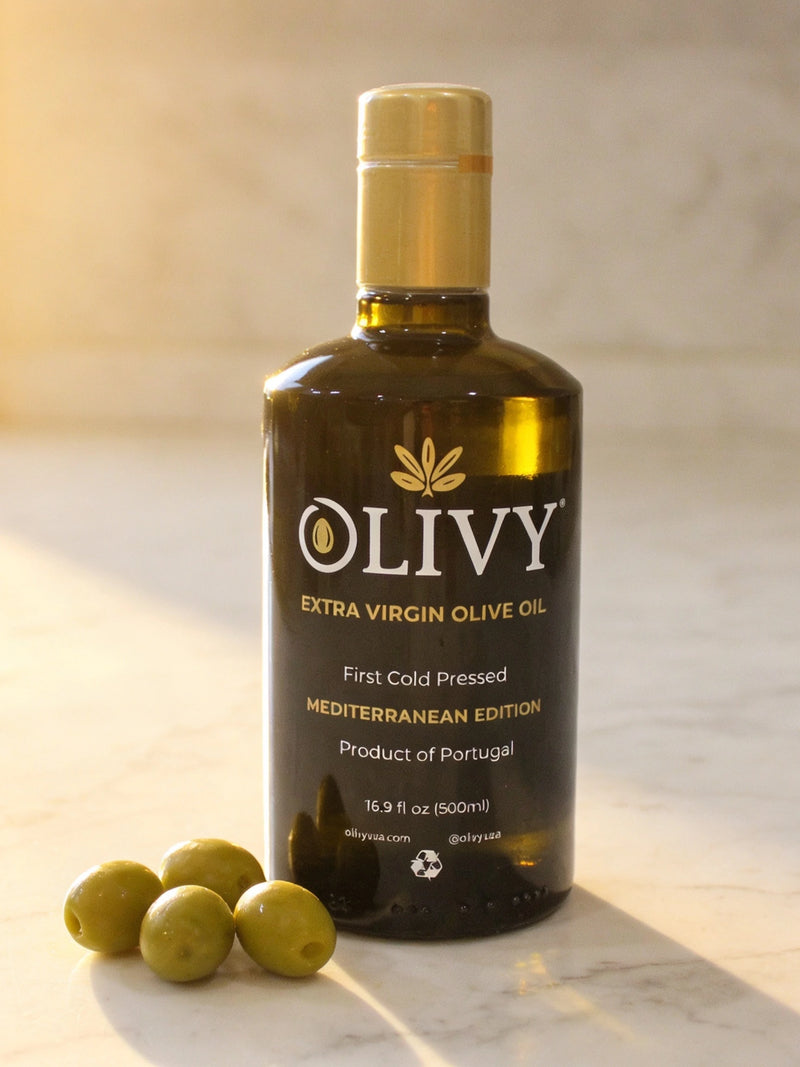
Olivy sources its oil from a single Portuguese origin. You can read about the production standards and harvest protocols at olivyusa.com
The 0.5% vs 0.8% Acidity Question — Does It Actually Matter for Health?
Searchers frequently ask whether buying a 0.5% acidity EVOO over a 0.8% acidity EVOO produces meaningfully different health outcomes. The honest answer: the acidity difference itself is not what matters. What matters is what that difference signals about everything upstream.
Two oils at 0.5% and 0.8% acidity may have polyphenol contents that differ by 200–400 mg/kg — which is substantial. A study comparing high- and low-polyphenol EVOO in clinical settings consistently finds that the phenolic fraction drives measurable outcomes: LDL oxidation protection, endothelial function, inflammatory markers, and bioavailability of oleocanthal.
The acidity number is a proxy. There is a strong correlation between low acidity and high polyphenol content. The same factors that cause high acidity — damage, delay, heat — also destroy delicate polyphenols. If an oil has very low acidity, it is highly likely that it retains a robust profile of antioxidants. O-Liv
Choosing a 0.3% acidity EVOO from a traceable single-origin producer with a published harvest date is not the same decision as choosing the cheapest EVOO in the EVOO section that happens to test at 0.5%. The acidity number needs context.
How Polyphenol Content Changes Over Time
This section is critical for understanding why the harvest date matters as much as the acidity reading.
Free fatty acids, peroxide values, and other oxidation markers significantly increase during storage, suggesting heightened hydrolysis and oxidation. A cultivar effect was observed, with some varieties showing less susceptibility to oxidation than others. nih
Polyphenols degrade over the oil's life even under ideal conditions. Research consistently shows that polyphenol content can drop by 30–50% between the first month post-harvest and month 18, even in dark glass storage. This means a high-polyphenol oil from the previous year may now contain fewer functional compounds than a mid-tier oil from the current harvest.
Practical guidance:
- Consume within 12–18 months of harvest date
- Store in a dark, cool location (15–18°C ideal; pantry shelf away from the stove is sufficient)
- Dark glass or tin protects better than clear glass or plastic
A Practical Framework for Buying EVOO by Acidity and Polyphenol Potential

Summary: What the Data Tells Us
Lower acidity in extra virgin olive oil reliably signals the conditions that preserve polyphenols — early harvest, rapid milling, cold extraction, and careful fruit handling. The correlation is strong and well-documented in peer-reviewed literature and quality-grading standards across the EU, IOC, and USDA frameworks.
Acidity alone is not sufficient to assess polyphenol content. A refined oil can be chemically stripped to low acidity with no remaining polyphenols. Context — harvest date, origin, extraction method, and sensory profile — is what transforms a low-acidity reading into a meaningful quality signal.
For consumers buying olive oil with health outcomes in mind, the hierarchy is: harvest date first, then acidity, then polyphenol count if disclosed. Each number is most meaningful in combination with the others.
Olivy is a single-origin Portuguese extra virgin olive oil produced to premium acidity standards and sourced from a named estate with published harvest data. Shop Now