What is a smoke point and why does it matter?
Smoke point matters because degraded oil can produce harmful compounds — acrolein, aldehydes, and free radicals. The concern with EVOO was that its lower smoke point (compared to refined oils like avocado or ghee) made it more prone to this breakdown.
But two things are left out of that conversation: first, high-quality EVOO has a higher smoke point than low-quality EVOO, because purity matters. Second, and more importantly, home cooking rarely reaches 200°C. Sautéing is typically around 120–160°C. Roasting vegetables in a home oven at 200°C doesn't mean the oil in the pan hits 200°C. Most everyday cooking stays well below the threshold.
Does heating EVOO destroy its health benefits?
Some polyphenols are sensitive to heat, but research from the University of the Basque Country found that even after frying at 180°C, EVOO retained significantly more antioxidants than refined vegetable oils. The stability is partly due to its high oleic acid content — a monounsaturated fat that resists oxidation better than polyunsaturated fats found in sunflower or canola oil.
A 2020 study published in Antioxidants concluded that EVOO is more resistant to thermal degradation than most commonly used cooking oils. The Olive Oil Times summarises the current research consensus well.
TEMPERATURE REFERENCES
- EVOO smoke point: 190–210°C
- Sautéing: ~120–160°C
- Roasting (home oven): ~180–220°C
- Deep frying: ~170–190°C
- Steak searing: 230°C+
What should you actually use EVOO for in cooking?
The short answer: almost everything, with one caveat. For very high-heat applications — deep frying above 190°C, searing a steak in a cast-iron pan over full flame — avocado oil or ghee is a better technical choice. For everything else:
- Drizzling on finished dishes (where EVOO shines most — polyphenols fully intact, flavour unaltered).
- Roasting vegetables at oven temperatures up to 220°C.
- Sautéing and pan-frying at moderate heat.
- Pasta sauces, soups, dressings, marinades.
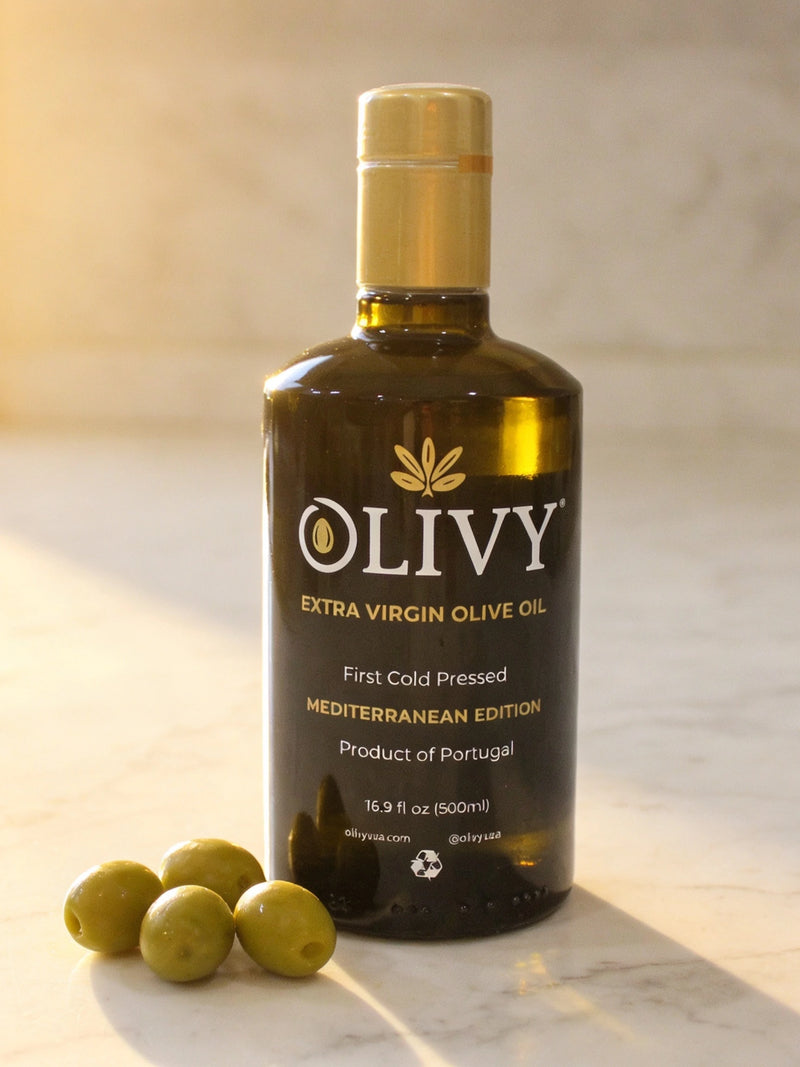
Try Olivy EVOO for finishing — a drizzle over grilled fish, fresh bread, or even vanilla ice cream (a growing trend popularised by the wellness and food communities) is where a single-origin oil's flavour complexity is most perceptible.
Is the smoke point different between EVOO grades?
Yes. Lower-quality EVOO (higher acidity, more impurities) has a lower smoke point. High-quality, freshly pressed EVOO from a single estate can reach 210°C. This is another reason why quality matters beyond just flavour — it is also a safety consideration if cooking at higher temperatures.
"Best as a finish. Exceptional as a foundation."
SHOP OLIVY EVOO