

We test. We publish. You verify.
When UC Davis tested imported 'extra virgin' olive oil sold in California, 69% failed to meet extra virgin standards (UC Davis Olive Center, 2010). Most of it wasn't what the label promised. That's why we send every harvest to an independent lab and publish the full panel in plain language. No marketing math, no rounded-up numbers, so you never have to take our word for it.
POLYPHENOLS
The natural antioxidants behind olive oil's peppery bite, and a big part of why it's good for you. Higher is better.
Our oil
439 mg/kg
EU reference
250 mg/kg
439 mg/kg total polyphenols, among the higher levels found in extra virgin olive oil.
ACIDITY
A measure of how gently the olives were picked, pressed, and handled. Lower is better.
Our oil
0.11%
Extra-virgin max
0.8%
0.11% free acidity, roughly seven times below the 0.8% legal limit for extra virgin.
PEROXIDE VALUE
Measures oxidation: how well the oil has been protected from heat, light, and air since pressing. Lower is better.
Our oil
6.2 meq/kg
Extra-virgin max
20 meq/kg
6.2 meq/kg, well under the 20 meq/kg limit, thanks to early pressing and dark glass.
Full Lab Reports
Download the complete third-party analysis for each batch. The same document we read before signing off a harvest.
Download PDF
January 2025 — Lote 2
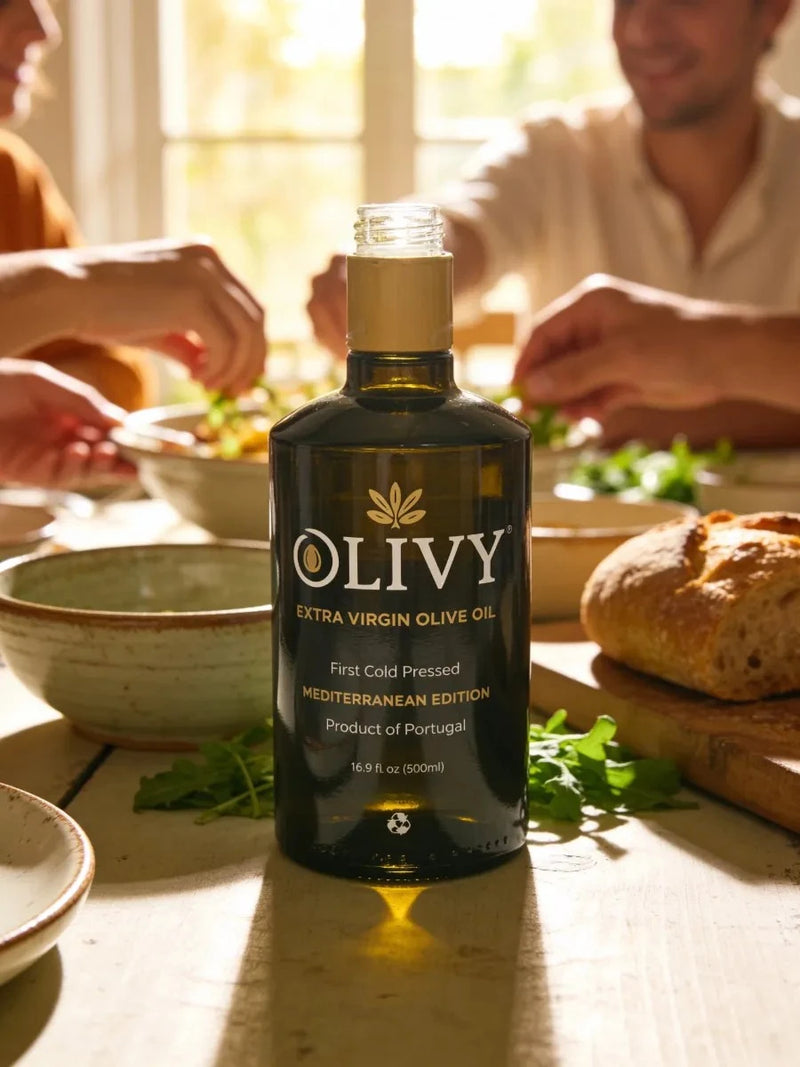
We got tired of guessing what was on our family's table.
- Independent, third-party labs, never us
- Single-origin, traceable to the grove
- Every batch, every harvest, on the record
Understanding the Numbers
What are polyphenols and why do they matter?
Polyphenols are the natural antioxidants in olive oil, the compounds behind that peppery catch at the back of your throat. They are a big part of what makes good olive oil good for you. Ours measured 439 mg/kg, among the higher levels you'll find in extra virgin olive oil.
What does acidity actually tell you?
Free acidity measures how gently the olives were handled: picked at the right moment, pressed fast, kept cool. The lower the number, the fresher and more carefully made the oil. The legal ceiling for extra virgin is 0.8%; ours is 0.11%.
How is peroxide value tested?
Peroxide value tells you how much the oil has oxidised, or how well it has been protected from heat, light and air since pressing. Lower is fresher. The extra-virgin limit is 20 meq/kg; ours sits at 6.2.
Who performs this testing?
An independent university lab: the Laboratório de Estudos Técnicos at the Instituto Superior de Agronomia, University of Lisbon. We send a sample from every batch and publish the full report here, exactly as it comes back.
How often is each batch tested?
Every batch, every harvest. A new pressing means a new report, posted here in full with its batch number.
Proof you can read.
Flavour you can taste.
Every harvest we sell is tested, and every report is published here in full.
