Extra Virgin Olive Oil for Frying: What the Research Actually Shows

The idea that extra virgin olive oil for frying is dangerous or wasteful is widespread — and mostly wrong.
The research on EVOO heat stability shows it performs well at typical frying temperatures. In fact, it outperforms several oils commonly considered "safer" for high-heat cooking. Here's what the science shows and how to use it practically.
The Smoke Point of Extra Virgin Olive Oil for Frying
Smoke point is the temperature at which an oil begins to break down visibly and produce smoke. For EVOO, that range is 375–405°F (190–207°C) depending on polyphenol content and free fatty acid levels.

Standard shallow frying sits at 325–375°F. Deep frying targets 350–375°F. So EVOO's smoke point is within the usable range for most frying applications.
Smoke Point Isn't the Right Metric Anyway
Smoke point tells you when an oil starts to break down visibly. But the more important question is what compounds form during that breakdown.
A 2017 study published in the Journal of the American Oil Chemists' Society tested 10 oils under high-heat cooking conditions and measured the formation of polar compounds — the harmful byproducts of oil degradation. EVOO produced the lowest concentration of polar compounds of all oils tested, including canola, sunflower, and refined olive oil. (Source: JAOCS, 2017)
The reason is polyphenols. Because EVOO contains significant phenolic antioxidants, it resists oxidation under heat better than polyunsaturated oils with higher smoke points but no antioxidant protection. High-smoke-point oils like sunflower are mostly polyunsaturated fats — and those are far more reactive under heat.
Shallow Frying vs. Deep Frying with Extra Virgin Olive Oil
Shallow frying (the better use case) Frying eggs, sautéing vegetables, pan-frying fish or chicken breasts at medium-high heat — all well within EVOO's stable range. This is where EVOO excels because temperatures stay controlled and the phenolic compounds provide oxidative stability throughout.
Deep frying (possible, with caveats) Deep frying is possible with EVOO. But because it requires large volumes of oil and extended high temperatures, two problems arise. First, cost — high-quality EVOO costs more than commodity frying oils. Second, reuse — EVOO degrades faster with repeated heating cycles. So for a single batch of fried food, EVOO works. For commercial-volume frying, a refined neutral oil is more practical.
What Happens to Polyphenols During Frying
Some polyphenol loss occurs at frying temperatures. A 2020 study in Antioxidants found:
- Sautéing at 120°C / 248°F: ~40% phenolic loss
- Deep frying at 170°C / 338°F: 50–75% loss
The oleic acid — roughly 73% of EVOO — remains stable. So even after polyphenol loss, EVOO-fried food contains a higher proportion of monounsaturated fats than food fried in seed oils. For this reason, Mediterranean cultures have fried in olive oil for centuries without the health outcomes associated with modern seed oil-fried diets.
Extra Virgin Olive Oil for Frying: Practical Rules
- Use fresh oil — Don't fry with oil that's been open for months. Polyphenol content and stability decline over time.
- Don't overheat — Keep your pan or fryer at 350°F max. A thermometer removes the guesswork.
- Don't reuse excessively — Strain after each use and limit reuse to 2–3 rounds for shallow frying.
- Use a high-polyphenol EVOO — The higher the starting polyphenol content, the better the heat stability. It matters.
The Bottom Line
Extra virgin olive oil for frying is safe, stable, and produces fewer harmful compounds than most alternatives at typical cooking temperatures. The polyphenol content is the stability mechanism. That's why oil quality directly affects how well it performs under heat.
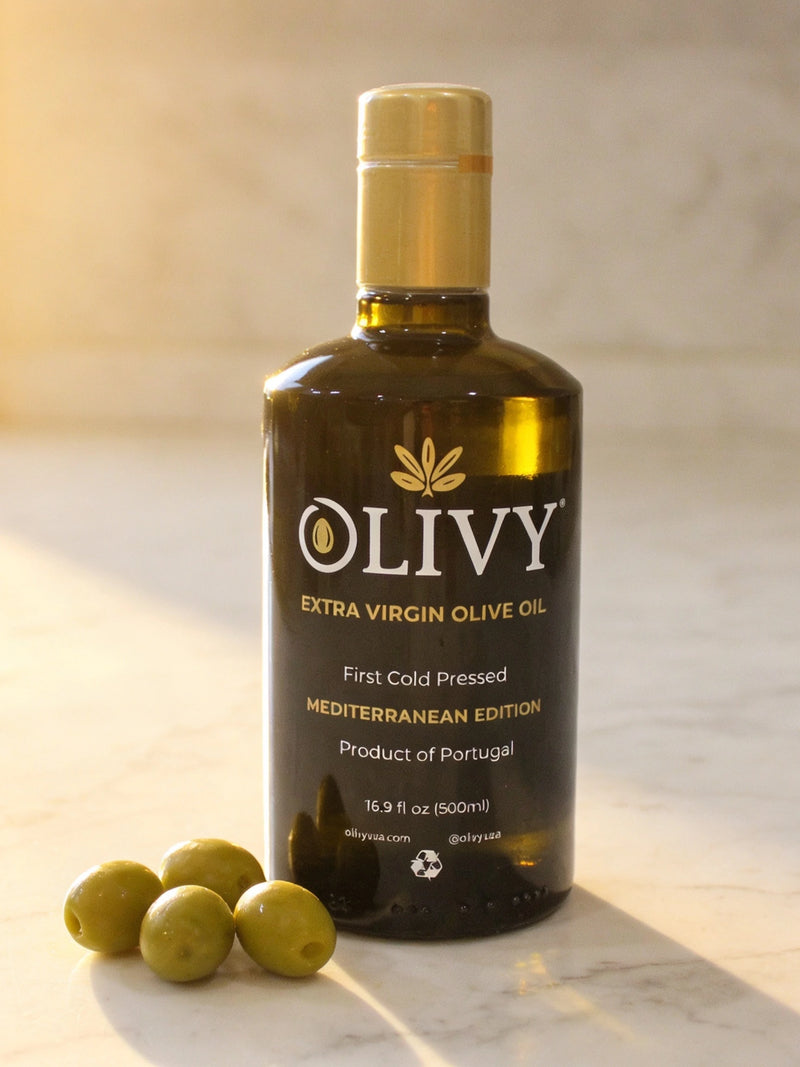
Olivy is an early-harvest Portuguese EVOO with high polyphenol density — the factor that matters most for heat stability.
Shop Olivy →