Olive Oil and Heart Health: What the Research Actually Says

Olive Oil Heart Health: What the Research Actually Shows
Olive oil heart health isn't a marketing claim. It's one of the most studied relationships in nutritional science.
The research spans decades, multiple continents, and hundreds of thousands of participants. The findings consistently point in one direction: regular consumption of high-quality extra virgin olive oil is linked to lower rates of heart disease, stroke, and cardiovascular death. But the quality of the oil matters more than most people realize.
What the Research Shows
The PREDIMED trial is the most cited study in this field. It followed over 7,000 people at high cardiovascular risk across Spain. Those who consumed extra virgin olive oil daily had a 30% lower rate of major cardiovascular events compared to a low-fat control group. (NEJM, 2013)
A 2022 Harvard study in the Journal of the American College of Cardiology found that people who consumed more than half a tablespoon of olive oil daily had a 19% lower risk of dying from cardiovascular disease compared to those who rarely consumed it.
The American Heart Association now includes olive oil in its dietary recommendations for reducing heart disease risk. (AHA Guidelines)

Table from (NEJM, 2013)
The Compounds Behind Olive Oil Heart Health Benefits
Three compounds drive the cardiovascular benefit:
Oleocanthal Oleocanthal inhibits COX-1 and COX-2 enzymes — the same pathway used by ibuprofen. Because chronic arterial inflammation is a primary driver of heart disease, this matters. Fresh, high-quality EVOO contains meaningful amounts. Most mass-market oils contain almost none.
Oleic Acid Olive oil is roughly 73% oleic acid, a monounsaturated fat. Studies show it reduces LDL cholesterol oxidation and may raise HDL cholesterol. Since oxidized LDL is a key contributor to arterial plaque, this is a direct cardiovascular mechanism.
Polyphenols High-quality EVOOs contain hydroxytyrosol and oleuropein. Both protect LDL particles from oxidation and reduce systemic inflammation. The EU has approved a health claim for olive oil polyphenols and protection of blood lipids from oxidative stress. (EFSA, 2011)
Why Quality Matters for Olive Oil Heart Health
Not every bottle labeled "extra virgin" delivers the same compounds.
Polyphenol content varies based on olive variety, harvest timing, processing method, and storage conditions. Early-harvest olives have far more polyphenols than late-harvest. Heat processing strips them out fast.
A high-polyphenol EVOO can contain 300–800 mg/kg of total phenols. Many grocery store bottles test below 100 mg/kg. So while both are labeled "extra virgin olive oil," they are not delivering the same health effect.
Olive Oil Heart Health: How Much Per Day
Most research showing cardiovascular benefit used 2–4 tablespoons per day, as part of a broader Mediterranean eating pattern.
Daily use matters more than occasional use. Because consistency is the key variable in all the long-term studies, drizzling over salads, using as a finishing oil, or adding to cooked vegetables are practical daily habits that match the research protocols.
The Olivy Standard
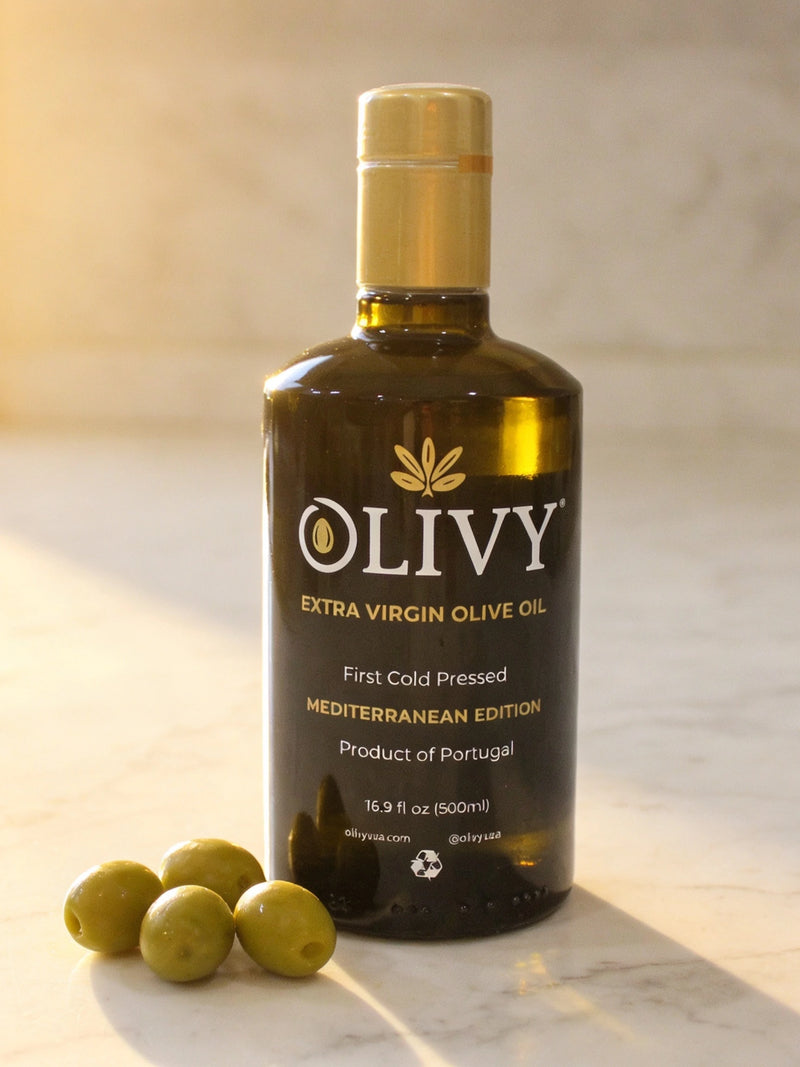
Olivy is a single-origin extra virgin olive oil from Portugal. It's harvested early to preserve maximum polyphenol content, then cold-pressed and bottled close to harvest.
If you're consuming olive oil for heart health, the variety you choose changes what you're actually getting.
Explore Olivy EVOO →