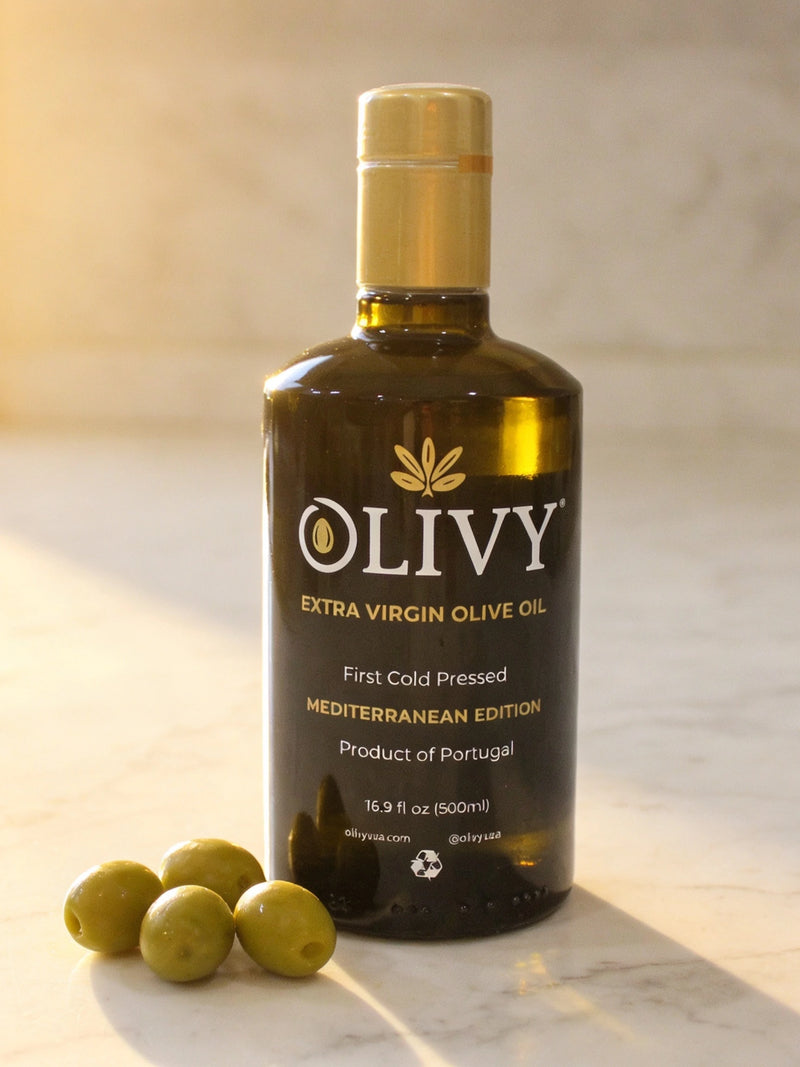
Walk into any gourmet food shop and the olive oil section is a wall of Italian and Spanish labels. Portuguese EVOO barely registers — despite the country being one of Europe's largest per-capita consumers of olive oil and home to cultivars that regularly place in international competitions. Here is what you are missing.
What makes Portugal's olive-growing conditions distinctive?
Portugal's olive-growing regions — the Alentejo, Trás-os-Montes, Ribatejo — experience hot, dry summers and cooler Atlantic winters. This thermal variation stresses the olive tree in a way that increases phenolic compound production in the fruit. The result is oil that is often more intense, more bitter, and higher in bioactive compounds than many mass-produced Spanish or Italian alternatives.
The country has also maintained a wider diversity of indigenous olive cultivars — Galega, Cobrançosa, Verdeal Transmontana, Maçanilha — each with distinct flavour signatures. Most of the world's commercial olive oil comes from Arbequina and Picual. Portugal's cultivar diversity is a largely unexplored story for international buyers.
How does Portuguese EVOO compare on quality metrics?
| METRIC | PORTUGUESE EVOO (TOP ESTATES) | TYPICAL SUPERMARKET EVOO |
|---|---|---|
| Polyphenol content | Often 300–600+ mg/kg | Typically <150 mg/kg |
| Free acidity | Often <0.2% | Up to 0.8% (legal limit) |
| Harvest-to-press time | Under 24 hours on good estates | Often days to weeks |
| Cultivar traceability | Named cultivar on label | Rarely listed |
Why is Portuguese olive oil less well-known internationally?
It comes down to marketing, not quality. Italy and Spain have invested heavily in promoting their olive oil industries internationally — PDO designations, restaurant partnerships, culinary tourism. Portugal, particularly for olive oil, has historically exported in bulk to be bottled and sold under Italian or Spanish brand names.
This is changing. A new generation of Portuguese producers is bottling under their own labels, obtaining international certifications, and entering prestigious competitions like the Terra Olivo and EVOOLYMPICS, where Portuguese entries have claimed top honours in recent years.
What should Portuguese EVOO taste like?
Expect intensity. Portuguese oils — especially those made from Galega or Cobrançosa olives — tend to have a strong grassy, herbal nose, an assertive bitterness mid-palate, and a long, peppery finish. That pepper is oleocanthal. The stronger it is, the higher the polyphenol content.
If you find most EVOO on the market mild and buttery, you have been drinking early-harvest Portuguese oil's opposite. Try Olivy — it is the high-polyphenol, single-estate Portuguese oil most American buyers have not yet encountered.
How should I use a bold Portuguese EVOO?
Its intensity is an asset in the right contexts. Use it to finish grilled meats, drizzle over white beans or chickpea salads, emulsify into vinaigrettes, or do as much of the Mediterranean world does — dip bread into it directly. Its pepper and bitterness balance rich or fatty dishes far better than a mild, buttery EVOO would.
"Single-estate. Portuguese. Pressed within 24 hours."
SHOP OLIVY EVOO