EVOO: What It Is, Why It Matters, and How to Choose a Good One

EVOO: What It Is, Why It Matters, and How to Choose a Good One
EVOO is extra virgin olive oil — the highest quality grade of olive oil and the only one that retains the bioactive compounds linked to meaningful health benefits.
The term gets used loosely in recipes, restaurants, and grocery stores. But EVOO has a precise legal definition, a specific production method, and a measurable chemical profile that separates it from every other olive oil on the shelf. Here's what it actually means, what the research shows, and how to find a bottle worth buying.
What EVOO Means
EVOO must meet three standards to qualify:
- Produced purely by mechanical means — no chemical processing, no heat treatment
- Free fatty acid content below 0.8%
- No sensory defects — clean, pleasant smell and flavor with no rancidity or mustiness
These standards are defined by the International Olive Council, the main intergovernmental body for the olive oil trade. International Olive Council — Olive Oil Grades and Standards
Meeting the minimum EVOO standard doesn't guarantee a high-quality oil. The standard is a floor, not a ceiling. An early-harvest, single-origin EVOO pressed from high-polyphenol olives is in a completely different category from a mass-market oil that technically meets the threshold but contains almost no beneficial compounds.
What Makes EVOO Different from Other Olive Oils

The difference comes down to processing. Other olive oil grades are refined — treated with heat, chemicals, or both to correct defects and extend shelf life. Refining removes flavor, color, and almost all polyphenols.
EVOO skips refining entirely. Because it goes straight from olive to bottle via cold-press extraction, it retains:
- Oleocanthal — a natural anti-inflammatory compound that inhibits COX-1 and COX-2 enzymes, the same pathway targeted by ibuprofen
- Hydroxytyrosol — one of the most potent antioxidants found in any food
- Oleuropein — an antimicrobial antioxidant found in high concentrations in early-harvest olives
- Oleic acid — a monounsaturated fat (~73% of EVOO) linked to reduced LDL cholesterol oxidation
Refined olive oil, light olive oil, and pomace oil all share olive oil's basic fat profile — but they contain negligible amounts of the phenolic compounds above.
What the Research Shows About EVOO
The clinical evidence for EVOO is stronger than for almost any other single food.
The PREDIMED trial — the largest dietary intervention study ever conducted on olive oil — followed 7,447 participants at high cardiovascular risk. Those consuming EVOO daily had a 30% lower rate of major cardiovascular events compared to a control group. The findings held up when the study was reanalyzed and republished in 2018. PREDIMED Study — NEJM 2018
The European Food Safety Authority has issued an approved health claim for EVOO polyphenols: consuming oil with at least 5mg of hydroxytyrosol per 20g protects blood lipids from oxidative stress. That's a regulated claim, not a marketing statement.
EVOO Quality Varies More Than the Label Suggests
Not all bottles labeled "EVOO" deliver the same results. Polyphenol content varies from under 50 mg/kg in oxidized or late-harvest oils to over 800 mg/kg in premium early-harvest EVOOs. That's a difference of 16x or more between two bottles with identical labels.
A 2011 UC Davis study tested 124 imported EVOO samples sold in California. 69% failed to meet EVOO standards under more rigorous testing — primarily due to oxidation and poor storage conditions before reaching the shelf. UC Davis Olive Center — Imported EVOO Report
How to Choose a Good EVOO
Look for a Harvest Date
A best-by date tells you when to stop using the oil. A harvest date tells you when the olives were actually pressed. Fresh EVOO from the current season has significantly more polyphenols than oil from a previous harvest still in distribution.
Choose Early Harvest
Early-harvest olives — picked before full ripeness — contain the highest polyphenol concentrations. Look for terms like "early harvest," "fresco," or "novello" on the label.
Buy Single Origin
Blended EVOOs combine olives from multiple regions or countries. Single-origin oils are fully traceable — you know the variety, climate, and producer. Because polyphenol content depends heavily on cultivar and growing conditions, single-origin is the only way to know what you're getting.
Taste It
Swallow a small spoonful and wait 10–15 seconds. A high-quality EVOO produces a peppery sting at the back of the throat — caused by oleocanthal. No burn means low oleocanthal, which means limited anti-inflammatory activity. This is the fastest real-world quality test available.
The Olivy Standard
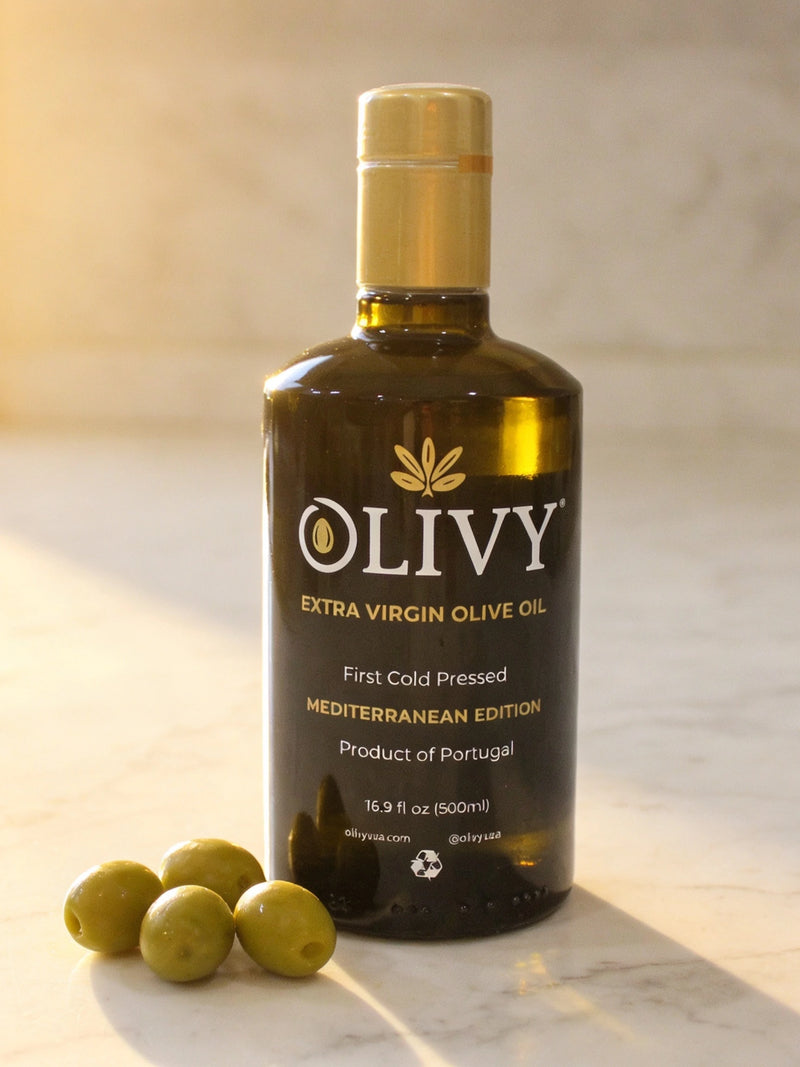
Olivy is a single-origin Portuguese EVOO — early-harvest, cold-pressed, and bottled to preserve polyphenol content. It's the kind of EVOO the research actually studied.
Shop Olivy EVOO →