Olive Oil Tasting: How to Evaluate EVOO Like a Professional

Olive oil tasting is a formal sensory discipline — not a casual activity. The International Olive Council developed a structured tasting protocol used by professional panels worldwide to assess EVOO quality, freshness, and defects.
Understanding how it works changes how you shop, cook, and choose oil. Here's the full process.

Why Olive Oil Tasting Matters
Most people choose olive oil by label, price, or brand familiarity. None of those reliably predict quality. Polyphenol content, freshness, and the presence or absence of defects can only be assessed through taste and smell.
The IOC's official tasting method is used by certified panels to classify olive oils as extra virgin, virgin, or defective — and the same framework is useful for anyone who wants to buy better oil. International Olive Council — Sensory Analysis
The Olive Oil Tasting Protocol
Step 1 — Warm the Glass
Professional tasters use small blue cobalt glasses — the color masks the oil so visual appearance doesn't bias the evaluation. The glass is warmed in both palms to 28°C (82°F), which releases volatile aromatic compounds.
At home: use a small wine glass or shot glass. Warm it with your hands for 30 seconds before pouring.
Step 2 — Assess the Aroma
Cover the glass, swirl gently, then inhale steadily for 2–3 seconds. Don't sniff quickly. The goal is to identify the aroma category:
- Fruity — fresh, grassy, green or ripe fruit notes (positive)
- Floral — light, delicate fragrance (positive)
- Musty/Humid — earthy, basement smell (defect — indicates improper storage)
- Rancid — waxy, crayon-like smell (defect — oxidized oil)
- Winey/Vinegary — fermentation smell (defect — overly ripe or damaged olives)
Any of the defect categories automatically disqualifies an oil from the EVOO grade in professional evaluation.
Step 3 — Take a Small Sip
Take about 3ml — less than a teaspoon. Pull it across the tongue and distribute it throughout the mouth. Let it coat the palate before swallowing.
Step 4 — Assess Three Positive Attributes
Professional tasters evaluate three specific positive characteristics:
Fruitiness The intensity of fresh olive flavor — green (unripe olive) or ripe (mature olive). High-quality early-harvest EVOO is typically intensely or medium fruity with green notes. This is the first attribute scored.
Bitterness A positive attribute — bitterness comes from polyphenols, specifically oleuropein and related compounds. Strong bitterness indicates a fresh, high-polyphenol oil. Late-harvest oils are often low in bitterness because polyphenol content has dropped.
Pungency The peppery sting felt at the back of the throat after swallowing. This is oleocanthal — the anti-inflammatory compound. One cough = "one pepper" (mild). Two to three coughs = "two to three peppers" (high intensity). Higher pungency means more oleocanthal.
Step 5 — Score and Compare
Professional panels score each attribute on a scale of 0–10 and average across tasters. Defects are scored separately. The median defect score and median fruitiness score determine grade classification.
At home: you don't need numbers. You need to identify whether the three positive attributes (fruitiness, bitterness, pungency) are present — and whether any defect aromas appear.
What an Olive Oil Tasting Reveals About Quality
| Sensory Cue | What It Indicates |
|---|---|
| Strong peppery burn | High oleocanthal — strong anti-inflammatory activity |
| Noticeable bitterness | High polyphenol content — fresh, early-harvest oil |
| Green, grassy aroma | Early harvest, unripe olives — maximum phenolic content |
| Ripe fruit, mild flavor | Later harvest — lower polyphenol content, smoother |
| Rancid / crayon smell | Oxidized oil — past its best, limited health value |
| Musty smell | Improper storage or transport — defective |
| Flat, neutral taste | Refined oil — almost no polyphenols |
Olive Oil Tasting at Home: A Practical Setup
You don't need a certified panel to evaluate oil at home. A useful informal tasting:
- Use 2–4 oils side by side — one cheap grocery store EVOO, one mid-range, one premium
- Use identical small glasses, warmed in your palms
- Taste in the same order: aroma → sip → assess bitterness → assess pungency
- Cleanse your palate between samples with water and a plain cracker
- Note what's present, what's absent, and what strikes you as off
The differences between a flat, oxidized grocery oil and a fresh, high-polyphenol EVOO are immediate and unmistakable once you taste them side by side.
What Olivy Tastes Like
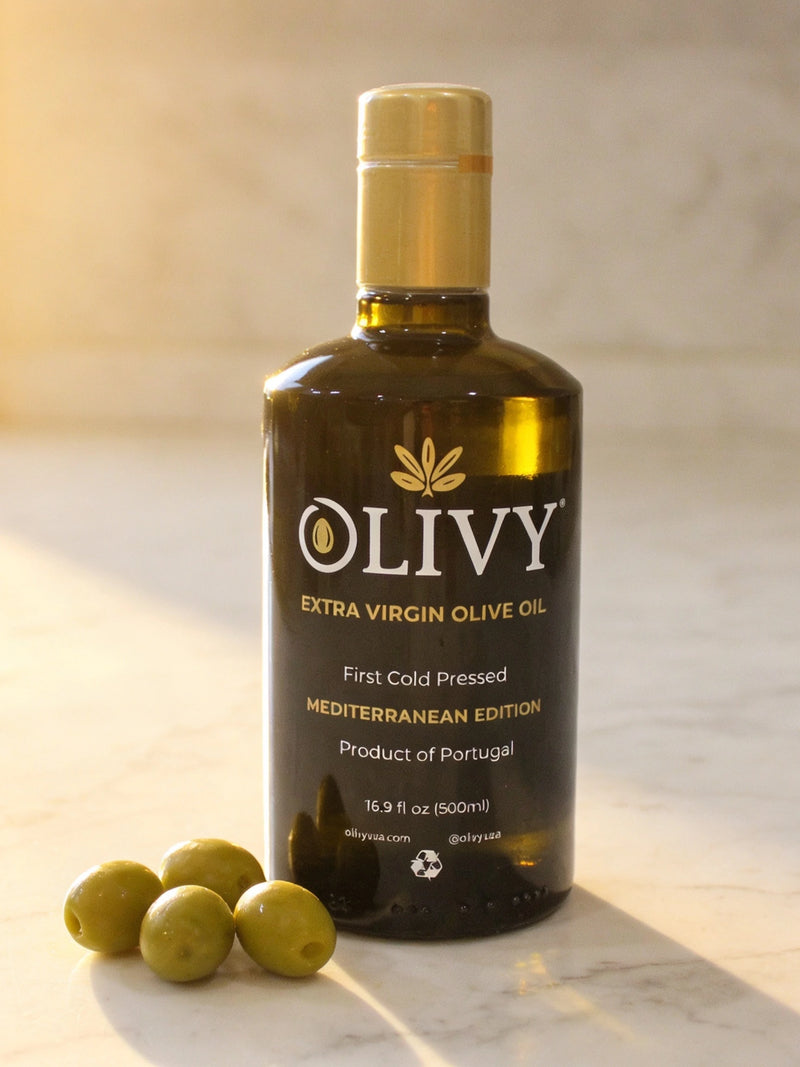
Olivy is an early-harvest, single-origin Portuguese EVOO. In a formal tasting, it presents with intense green fruitiness, noticeable bitterness from high polyphenol content, and strong pungency — the oleocanthal sting is pronounced. These are the attributes that indicate a fresh, bioactively rich oil.
Also read: Healthiest Extra Virgin Olive Oil → | Oleocanthal →