Healthiest Extra Virgin Olive Oil: What to Look For and Why It Matters

Searching for the healthiest extra virgin olive oil leads most people to a long list of brand names. But the question isn't which brand — it's which criteria actually determine health value.
Those criteria are well-established in the research. An oil either meets them or it doesn't. And most oils on the market, including many premium-priced ones, fall short on the measures that matter.
Why Most EVOO Isn't the Healthiest Option
Extra virgin olive oil has a legal definition. To qualify, oil must be mechanically extracted, have free acidity below 0.8%, and pass sensory evaluation. These are minimum standards — and passing them doesn't guarantee meaningful polyphenol content.
A 2011 UC Davis study tested 124 imported EVOO samples sold in California. 69% failed to meet EVOO standards under more rigorous testing — many due to oxidation, poor storage, or processing that degraded the oil before it reached shelves. (UC Davis Olive Center, 2011)
The point: the label tells you the minimum. It doesn't tell you the polyphenol content, harvest freshness, or whether the health benefits documented in research are actually present.
What Makes an Olive Oil the Healthiest
The research on olive oil health benefits consistently identifies polyphenol content as the key variable — not just fat composition. Specifically:
Oleocanthal — a natural COX-1 and COX-2 inhibitor. The compound responsible for olive oil's anti-inflammatory effect. Only present in meaningful amounts in fresh, high-quality EVOO. (Nature, 2005)
Hydroxytyrosol — one of the most potent dietary antioxidants. The EU's food safety authority (EFSA) has issued a health claim specifically for hydroxytyrosol in EVOO and protection of blood lipids from oxidative damage. (EFSA, 2011)
Oleuropein — an antimicrobial antioxidant. Highest in unripe olives and early-harvest oil.
The healthiest extra virgin olive oil is the one with the highest concentrations of these compounds. A high-polyphenol EVOO can contain 500–800 mg/kg of total phenols. A commodity EVOO often contains fewer than 50 mg/kg.
The 5 Criteria That Define the Healthiest Extra Virgin Olive Oil

1. Harvest Date — Not Best-By Date Polyphenols degrade over time. An oil pressed in October 2024 that's been sitting on a shelf until April 2026 has lost a significant share of its phenolic content. The healthiest option is oil from the most recent harvest. Look for a harvest date on the label — not just a use-by date, which tells you nothing about when the olives were pressed.
2. Early Harvest Olives harvested while still slightly green — before full ripeness — contain dramatically higher polyphenol concentrations. Terms like "early harvest," "fresco," or "novello" signal this. As olives ripen, polyphenol content drops. Late-harvest olives yield more oil per kilo but less healthy oil.
3. Single Origin Blended oils combine olives from multiple regions and sometimes multiple countries. Single-origin oils are traceable — you know the variety, the region, the producer. Because polyphenol content varies by cultivar and climate, single-origin is the only way to know what you're getting.
4. Cold-Pressed / Cold-Extracted Heat speeds up oil extraction but destroys polyphenols. Cold-pressed means the oil was extracted at temperatures below 27°C (80°F). This standard preserves phenolic compounds and aromatic volatiles. It's worth confirming on the label.
5. Third-Party Testing or Published Polyphenol Data The most reliable way to verify polyphenol content is a published lab result. Some producers test each batch and publish the total polyphenol count in mg/kg. This is the gold standard — it removes all guesswork.
The Throat Test
The fastest on-the-spot check: swallow a small spoonful and wait 10–15 seconds. A high-polyphenol oil produces a distinct peppery sting at the back of the throat — caused by oleocanthal. No burn means low oleocanthal content. This test won't give you exact numbers, but it's a reliable first filter.
Healthiest Extra Virgin Olive Oil: Quick Buyer Checklist
|
Criteria |
What to Look For |
|---|---|
|
Freshness |
Harvest date from current or last season |
|
Harvest type |
"Early harvest," "fresco," or "novello" on label |
|
Origin |
Single country or single estate — not "blend" |
|
Extraction |
"Cold-pressed" or "cold-extracted" |
|
Verification |
Published polyphenol mg/kg data if available |
|
Sensory |
Peppery burn at the back of the throat |
|
Packaging |
Dark glass or tin — not clear plastic |
What to Ignore
-
"Imported from Italy" — Italy imports large quantities of Spanish, Greek, and Tunisian oil, then bottles and labels it. Origin labeling can be misleading.
-
Price alone — Some expensive oils are expensive for branding reasons. Some very good oils are modestly priced. Polyphenol data matters more than retail price.
-
"Rich in antioxidants" — This phrase has no regulatory definition. It means nothing without accompanying data.
The Olivy Standard
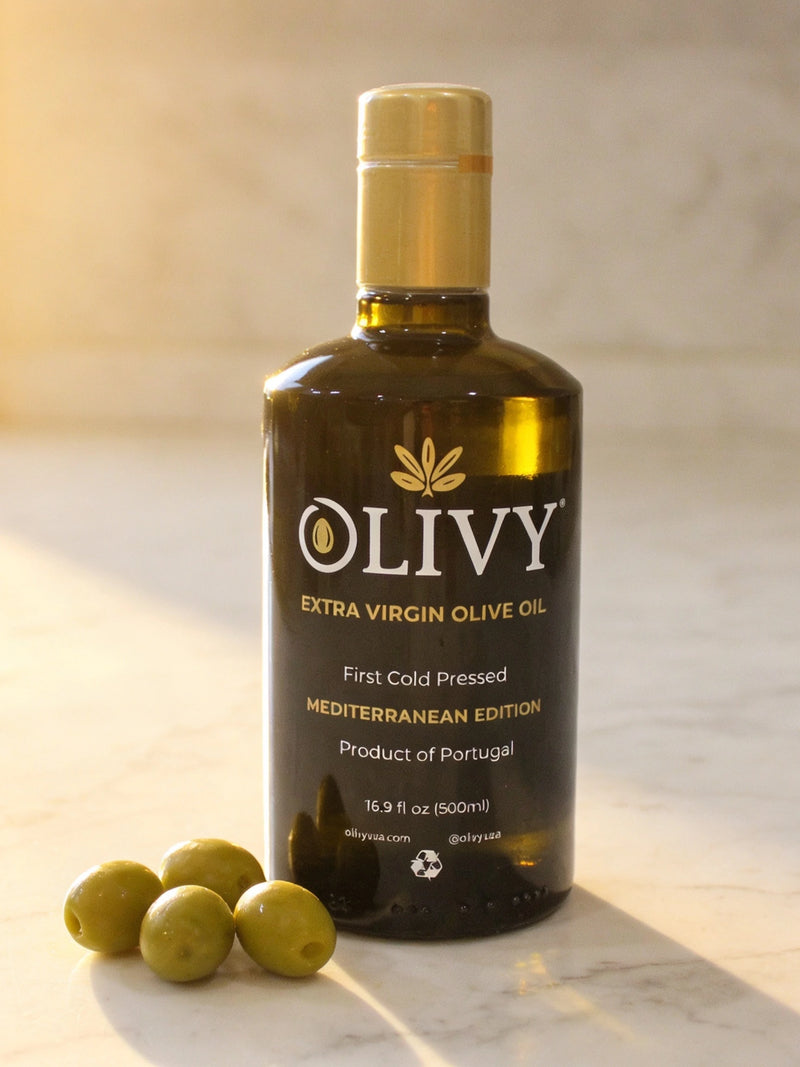
Olivy is a single-origin extra virgin olive oil from Portugal. It's harvested early, cold-pressed, and bottled close to harvest to preserve the phenolic content that makes the oil worth consuming in the first place. The peppery finish is real — and it means the oleocanthal is there.
Also read: Types of Olive Oil → | Olive Oil and Inflammation →