Extra Virgin Olive Oil Salad Dressing: Ratios, Recipes, and What to Avoid

Extra virgin olive oil salad dressing is one of the simplest things you can make in a kitchen. But the quality of your oil changes the final result more than any other ingredient.
Most bottled dressings use refined or blended oils. So when you make your own with a high-quality EVOO, the flavor difference is immediate. This guide covers the core ratios, recipe variations, and what makes one oil better than another for dressings specifically.

The Base Ratio for Extra Virgin Olive Oil Salad Dressing
The standard vinaigrette ratio is 3 parts oil to 1 part acid. For a single serving:
- 3 tablespoons extra virgin olive oil
- 1 tablespoon acid (lemon juice, red wine vinegar, or white wine vinegar)
- Pinch of salt
Optional: ½ teaspoon Dijon mustard (acts as an emulsifier to hold the dressing together)
That's it. Most recipes add complexity on top of this foundation — but the base never changes.
Recipe Variations
Classic Lemon Vinaigrette Mix 3 tbsp Olivy EVOO, 1 tbsp fresh lemon juice, ½ tsp Dijon mustard, salt, and cracked black pepper. Shake in a jar until emulsified. Works on leafy greens, roasted vegetables, and grain bowls.
Red Wine Vinegar Dressing Mix 3 tbsp EVOO, 1 tbsp red wine vinegar, 1 small minced garlic clove, ½ tsp dried oregano, salt. Let it rest for 10 minutes before serving. The garlic softens and the oregano blooms in the oil.
Balsamic Vinaigrette Mix 3 tbsp EVOO, 1 tbsp aged balsamic vinegar, ½ tsp honey, salt. Because balsamic is sweeter and thicker than other acids, the ratio shifts slightly — use a bit less than a full tablespoon if your balsamic is syrupy.
Tahini-Lemon EVOO Mix 2 tbsp EVOO, 1 tbsp tahini, 1 tbsp lemon juice, 1 tbsp water, 1 small garlic clove, salt. This is a richer dressing — good for grain bowls, roasted cauliflower, or falafel salads.
Why Oil Quality Matters Most in Dressings
In cooked applications, heat changes the flavor profile and strips some compounds from any oil. But in a raw dressing, the oil is the dominant flavor element — nothing changes it.
A high-polyphenol EVOO has a peppery, grassy, slightly bitter finish. That character carries directly into the dressing. A low-quality or oxidized oil tastes flat or waxy — and that comes through in the final dish.
So for cooking, a mid-range EVOO is fine. For dressings, it's worth using the best oil you have. The flavor difference is the point.
What to Avoid
Oxidized oil Olive oil oxidizes after opening, especially when stored near heat or light. An oxidized EVOO tastes rancid and waxy. If your oil smells like crayons or has no peppery bite, it's past its best. Smell before you dress.
The wrong acid Distilled white vinegar is too harsh for most EVOO dressings. It overpowers the oil's flavor. Use lemon juice, red wine vinegar, white wine vinegar, or champagne vinegar instead.
Pre-emulsified bottled "EVOO" dressings Most contain a small percentage of actual EVOO blended with cheaper oils, stabilizers, and sugar. Reading the ingredient list reveals this quickly. Making your own takes 60 seconds.
Storing Your Dressing
A basic vinaigrette keeps in the fridge for up to a week in a sealed jar. Because EVOO can solidify when cold, pull it out 10–15 minutes before serving and shake well. The emulsion will re-form at room temperature.
The Oil Makes the Dressing
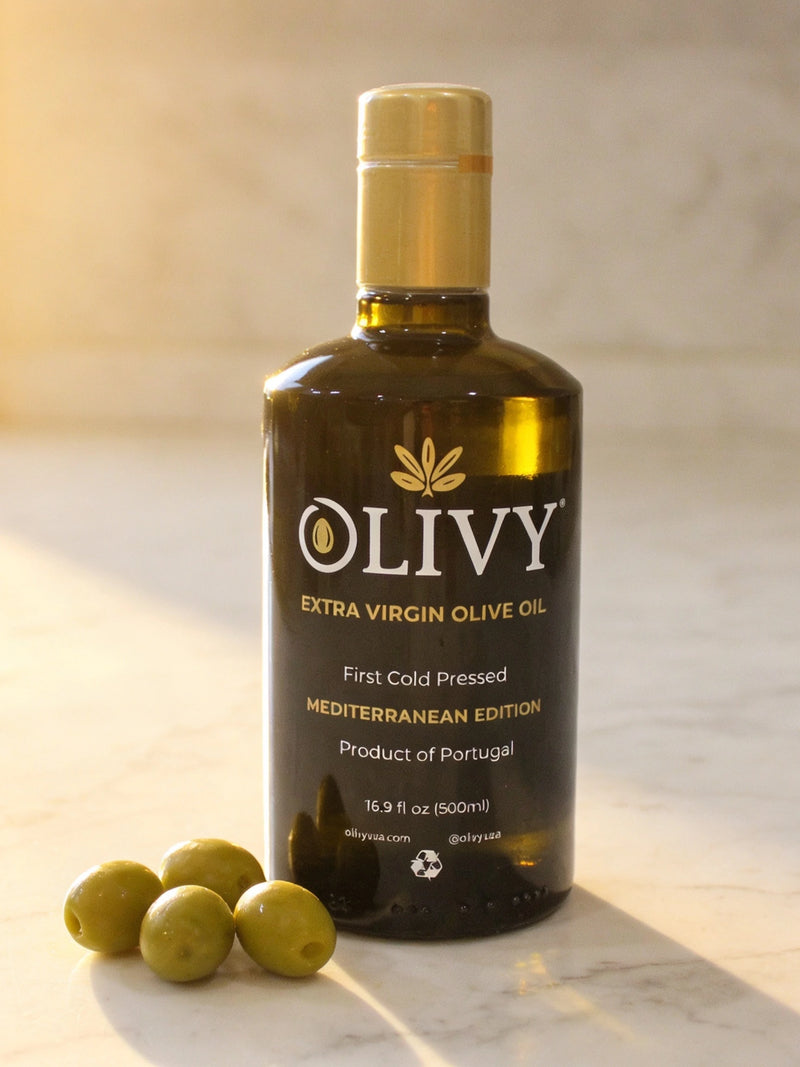
Olivy is a single-origin Portuguese EVOO — peppery, grassy, and harvested early for maximum polyphenol content. In a raw dressing, that character is fully present in every bite.
Also read: Olive Oil and Heart Health →