Polyphenol Rich Foods Compared: Olive Oil vs Green Tea, Coffee, and Red Wine

Among polyphenol rich foods, olive oil is not the one with the most polyphenols — coffee, tea and red wine all carry more per 100 ml, and it isn't close. Filter coffee measures around 214 mg per 100 ml against extra virgin olive oil's 62 mg, and since you drink a mug of coffee and use a tablespoon of oil, the gap per serving is larger still. That's the honest headline. The more useful answer is that these four aren't carrying the same compounds, they aren't absorbed the same way, and quantity is the least interesting thing about any of them.
The four, side by side
These figures come from "Identification of the 100 richest dietary sources of polyphenols", the 2010 study built on the Phenol-Explorer database that most polyphenol content lists ultimately trace back to. All measured the same way, which is what makes them comparable to each other:
| Source | Total polyphenols per 100 ml |
|---|---|
| Filter coffee | 214 mg |
| Black tea | 102 mg |
| Red wine | 101 mg |
| Green tea | 89 mg |
| Extra virgin olive oil | 62 mg |
For scale, the same list puts cloves at 15,188 mg per 100 g, cocoa powder at 3,448 mg, and black chokeberry above 1,700 mg. Beverages and oils are the modest end of the polyphenol world. The spices and the dark berries run away with it.
What a real serving delivers

Per 100 ml is a lab unit, not a kitchen one. Nobody drinks 100 ml of coffee or pours 100 ml of olive oil on a salad. Applied to portions people actually use:
| Source | Typical serving | Approximate polyphenols |
|---|---|---|
| Filter coffee | 240 ml mug | ~510 mg |
| Black tea | 240 ml cup | ~245 mg |
| Green tea | 240 ml cup | ~215 mg |
| Red wine | 150 ml glass | ~150 mg |
| Extra virgin olive oil | 1 tablespoon (15 ml) | ~9 mg |
A mug of coffee delivers something like fifty times the polyphenols of a tablespoon of olive oil. If your only goal is milligrams, the answer is coffee, and it isn't a debate.
So why does anyone talk about olive oil at all in this conversation? Three reasons, and they're the rest of this article.
Why this table won't match an olive oil label
If you've seen olive oil labels quoting 300, 439 or 800 mg/kg, that 62 mg per 100 ml figure probably looks wrong. It isn't — it's a different measurement.
The Phenol-Explorer figures use the Folin-Ciocalteu assay, which measures total reducing capacity and reports it as gallic acid equivalents. Olive oil labels typically quote a figure from HPLC following the International Olive Council's method, which identifies and quantifies specific phenolic compounds. The two produce different numbers for the same oil, and the Folin figure generally runs higher.
Which means the useful comparison is within a method, never across two. The table above compares five drinks and oils measured the same way. An olive oil's mg/kg figure compares to another olive oil's mg/kg figure. Line one up against the other and you're comparing a thermometer to a barometer. There's more on how the olive oil figure is produced in our piece on what mg/kg polyphenols means on a label.
They aren't the same compounds

"Polyphenol" is a category with thousands of members, roughly the way "vitamin" is. Treating a milligram of one as interchangeable with a milligram of another is the central mistake in most of these comparisons.
| Source | Dominant polyphenol class |
|---|---|
| Coffee | Hydroxycinnamic acids — chiefly chlorogenic acids |
| Green and black tea | Flavan-3-ols — catechins, and in black tea their oxidized forms |
| Red wine | Anthocyanins, flavonols and stilbenes, including resveratrol |
| Extra virgin olive oil | Phenolic alcohols and secoiridoids — hydroxytyrosol, tyrosol, oleuropein derivatives, oleocanthal |
Olive oil's set is the reason it gets studied separately. Hydroxytyrosol was identified early as having the strongest in-vitro antioxidant potential of the olive oil phenolics, and it's the specific compound the EU's olive oil labeling rule is written around — a threshold of 5 mg of hydroxytyrosol and its derivatives per 20 g of oil, roughly a tablespoon and a half. No equivalent EU claim exists for coffee's chlorogenic acids.
Quantity isn't absorption
The third reason the milligram count misleads: polyphenols are, as a class, poorly and inconsistently absorbed, and how much reaches your bloodstream depends heavily on what they arrived in.
The clearest demonstration comes from hydroxytyrosol itself. In a 2025 bioavailability review, the same 5 mg dose was delivered in different carriers — olive oil, flaxseed oil, grapeseed oil, margarine and juice. Only olive oil produced detectable free hydroxytyrosol in plasma; urinary recovery was about 0.86 µg per mg creatinine from extra virgin olive oil versus roughly 0.3 from the others. The authors' conclusion is that the food matrix "strongly modulates" bioavailability.
Even then, absolute absorption is modest — the same review reports roughly 10–13% of an ingested dose recovered as glucuronides after olive oil consumption, with wide variation between individuals. And what is absorbed doesn't linger: free hydroxytyrosol has a plasma half-life of around 8.6 minutes, and most of its metabolites clear within about four hours. Polyphenols aren't stored the way a fat-soluble vitamin is. They pass through.
That reframes the whole comparison. A single large dose isn't banked; what matters is what you eat repeatedly. Which is also why the frequency of a habit does more work than the milligram count of any one serving — two coffees a day is a far bigger cumulative contribution than a tablespoon of anything, and neither is competing for the same slot in a meal.
What moves an olive oil's own number
Since the only comparison that works is olive oil against olive oil, it's worth knowing what actually shifts that figure between two bottles:
- When the fruit was picked. Phenolic content falls as olives ripen, so early-harvest oil carries more — and yields less oil per kilo, which is why it costs more.
- The variety. Cultivars differ substantially in their phenolic profile before anything else in the process happens.
- How fast it got to the mill. Time between picking and pressing lets degradation start.
- Refining. Refined olive oil retains almost none of it — under 2 mg/kg of free hydroxytyrosol against a meaningful figure in extra virgin. This is the single largest drop in the whole chain.
- Age and storage. Light, heat and oxygen consume phenolics over time. A high figure at bottling and a year on a sunny counter don't end up in the same place.
What to actually do with this
- Stop optimizing for total milligrams. The number is method-dependent, poorly correlated with absorption, and says nothing about which compounds you're getting. Variety across sources beats maximizing one.
- Keep the coffee and the tea. On the numbers they're the heavy lifters in most people's diets, and neither is competing with olive oil for a slot on your plate.
- Use olive oil raw where you can. Its phenolics degrade with heat and time, so a finishing drizzle retains more than cooking with the same oil. Our post on what olive oil polyphenols do goes further into that.
- Remember the spices and berries. Cloves, cocoa and dark berries dwarf everything in this article on a per-100 g basis, and they're easy to add. There's a fuller list in our guide to foods high in polyphenols.
- When you do compare olive oils, compare like with like. Same method, same harvest year, named lab. Anything else is noise.
Frequently asked questions
Which has more polyphenols, olive oil or green tea?
Green tea, by both measures. Per 100 ml, green tea measures about 89 mg to extra virgin olive oil's 62 mg in the Phenol-Explorer dataset. Per serving the gap widens considerably, because a cup of tea is around 240 ml and a serving of olive oil is a tablespoon.
Does coffee have more polyphenols than red wine?
Yes. Filter coffee measures around 214 mg per 100 ml against red wine's 101 mg in the same dataset, and a mug of coffee is larger than a glass of wine, so the per-serving difference is bigger still.
If coffee has more, why does olive oil get the health research?
Because the compounds differ. Olive oil's phenolics are secoiridoids and phenolic alcohols — hydroxytyrosol, tyrosol, oleocanthal — which are studied separately from coffee's chlorogenic acids or tea's catechins. The EU's olive oil polyphenol labeling rule is written specifically around hydroxytyrosol and its derivatives; there is no equivalent claim for the others.
Why doesn't the 62 mg per 100 ml figure match my olive oil's label?
Different analytical methods. The Phenol-Explorer figures use the Folin-Ciocalteu assay reported as gallic acid equivalents; olive oil labels usually quote HPLC results following the International Olive Council method. The two aren't interchangeable, which is why polyphenol figures should only ever be compared within a single method.
Should I drink olive oil to get more polyphenols?
Using it as a finishing oil on food is the ordinary way it's consumed, and the bioavailability evidence suggests the oil matrix itself helps absorption. Whether to take it as a shot is a personal preference rather than something the research settles, and it's worth discussing changes in diet with a doctor or dietitian if you have specific health concerns.
Written by The Olivy Kitchen. The Olivy Kitchen is Olivy's in-house editorial team, writing about single-origin extra virgin olive oil, how it's tested, and how to use it. Every claim is tied to a published lab report or a cited source.
This article is for general educational purposes and isn't medical or nutritional advice. Talk to your doctor or a registered dietitian about your individual needs.
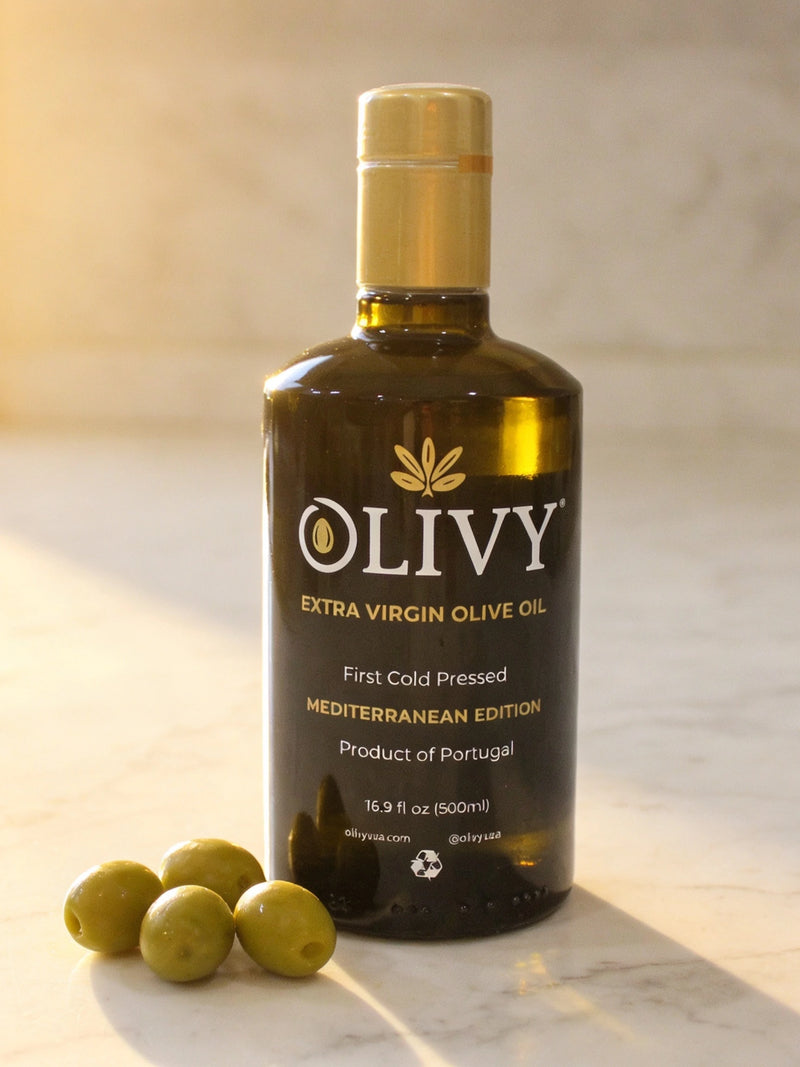
If you'd rather compare olive oils on a measured number than an adjective: Olivy Mediterranean Edition is tested at 439 mg/kg total polyphenols by an independent university laboratory, with every batch's report published.