Olive Oil Polyphenols: The Complete Health Benefits Guide

The best-supported claim about olive oil polyphenols benefits is narrow and specific: they help protect blood lipids from oxidative damage. That's the one statement European regulators have authorised, for oils containing at least 5 mg of hydroxytyrosol and derivatives per 20 g, at a daily intake of 20 g of olive oil. Everything beyond it — heart health, inflammation, brain ageing, longevity — has real research behind it and real limits on what that research shows. This guide walks through what each compound is, what the strongest studies actually found, where the evidence is supportive rather than settled, and how much you'd realistically need to eat.
This article is for general educational purposes and isn't medical or nutritional advice. Talk to your doctor or a registered dietitian about your individual needs.
Which polyphenols are actually in olive oil?

"Polyphenols" covers thousands of plant compounds. In extra virgin olive oil, a handful do most of the work, and the research is almost entirely about these four.
- Hydroxytyrosol — the most studied of the group, and the one written into the EU regulation. A small, well-absorbed molecule with strong antioxidant activity in laboratory measurement.
- Tyrosol — structurally similar, less potent as an antioxidant, and counted alongside hydroxytyrosol in regulatory thresholds.
- Oleuropein — the compound behind the bitterness of olives and young oil. It breaks down over time into hydroxytyrosol, which is part of why phenolic profiles shift as an oil ages.
- Oleocanthal — responsible for the peppery sting at the back of the throat, and the subject of the most-quoted and most-overstated finding in the field.
Three structural facts shape everything that follows.
First, these compounds are present in extra virgin olive oil specifically. Refining strips them out almost entirely — refined, "light," and "pure" olive oils typically land at 0–5 mg/kg. If a study is about olive oil polyphenols, it is not about the refined bottle.
Second, the amount varies enormously between honest extra virgin oils — commonly anywhere from under 100 to over 500 mg/kg — driven by harvest timing, variety, how quickly the fruit was pressed, and how the oil has been stored since. Polyphenol content isn't part of the extra virgin grade, so nothing about the label tells you where a bottle sits. We cover the mechanics in are high-polyphenol olive oils worth it.
Third, they decline. Light, heat, oxygen, and time all reduce phenolic content, with research on stored oils showing meaningful loss over 12–18 months. The number a lab measured at pressing describes the oil then.
Which olive oil polyphenols benefits are actually authorised?
Of everything written about olive oil polyphenols benefits, exactly one statement has cleared a regulatory evidence review in the EU.
Commission Regulation (EU) No 432/2012, following an EFSA assessment, permits the claim that olive oil polyphenols contribute to the protection of blood lipids from oxidative stress. It comes with conditions: the oil must contain at least 5 mg of hydroxytyrosol and its derivatives per 20 g, and the consumer must be told the effect is obtained at a daily intake of 20 g of olive oil.
Worth unpacking what that says and doesn't. LDL particles can be oxidatively modified, and oxidised LDL is thought to play a role in how arterial plaque develops. The authorised claim is that olive oil polyphenols help protect against that modification. It is a claim about a biochemical process, not about preventing a disease — and EFSA was deliberate about that boundary.
The threshold also converts to something practical. 5 mg per 20 g works out to roughly 250 mg/kg, which is where the widely-quoted 250 mg/kg reference point comes from. Plenty of extra virgin oil on shelves falls below it.
What the cardiovascular research found
This is where careful reading matters most, because the headline version has travelled much further than the finding.
The largest relevant trial is PREDIMED, which followed 7,447 Spanish adults aged 55–80 at high cardiovascular risk. Participants were assigned to a Mediterranean diet supplemented with extra virgin olive oil, the same diet supplemented with nuts, or a reduced-fat control diet. Over a median of about 4.8 years, the olive oil group had a lower incidence of major cardiovascular events — heart attack, stroke, and cardiovascular death — than the control group.
Three caveats belong with that result every time it's cited:
- It was retracted and republished. In 2018 the New England Journal of Medicine retracted the 2013 paper after irregularities were found in how some participants were randomised, and simultaneously published a reanalysis. The reanalysed results reached broadly similar conclusions, but the episode is part of the record.
- The intervention was a dietary pattern. Participants ate a Mediterranean diet with olive oil, not olive oil alone. Attributing the whole effect to the bottle overstates what was tested.
- The population was high-risk. These were older adults already at elevated cardiovascular risk. Results don't automatically transfer to a healthy thirty-year-old.
In the US, the FDA's position is a useful calibration. In 2018 it issued a qualified health claim for high-oleic oils — and a qualified claim is one where the evidence was judged credible but not conclusive, so the wording must carry that caveat. The authorised language reads:
"Supportive but not conclusive scientific evidence suggests that daily consumption of about 1½ tablespoons (20 grams) of oils containing high levels of oleic acid, when replaced for fats and oils higher in saturated fat, may reduce the risk of coronary heart disease."
Note two things. The claim is about oleic acid — the monounsaturated fat — not polyphenols. And it depends on replacing saturated fat rather than adding oil on top of an existing diet. Those conditions are the claim; without them it isn't the same statement.
If you want the fuller treatment of this literature, we went deeper in olive oil and heart health: what decades of research show.
Oleocanthal and inflammation, in proportion

In 2005, Gary Beauchamp's team published a finding in Nature that has been repeated ever since. Beauchamp noticed the throat sting of fresh extra virgin olive oil resembled the sensation of swallowing liquid ibuprofen, and the follow-up identified oleocanthal as the cause — a compound that inhibits COX enzymes through a mechanism pharmacologically similar to ibuprofen's.
The finding is real and genuinely interesting. The proportion is where it gets mangled. Roughly 50 g of extra virgin olive oil — about three and a half tablespoons — provides on the order of 10 mg of oleocanthal, which corresponds to somewhere around 10% of a standard adult ibuprofen dose. It is not a painkiller, it should never replace one, and the interesting hypothesis is about low-level, long-term dietary exposure rather than acute relief.
Beyond that mechanism, the inflammation literature is largely observational or short-term biomarker work. Diets rich in extra virgin olive oil have been associated with lower levels of certain inflammatory markers, but association studies can't establish causation, and biomarker changes don't reliably predict clinical outcomes. Our longer look at that evidence is in olive oil and inflammation: can EVOO actually reduce it.
Brain, gut, and metabolic research: the honest state of it
These are the areas where the gap between what's studied and what's claimed is widest. All three are active fields; none supports a confident statement about what a bottle will do for you.
| Area | What exists | What it doesn't establish |
|---|---|---|
| Cognition & ageing | Cell and animal work on hydroxytyrosol and oleocanthal; observational cohorts linking Mediterranean dietary patterns with slower cognitive decline | That olive oil polyphenols specifically prevent or slow cognitive decline in humans |
| Gut microbiome | Early human and animal studies suggesting polyphenols reaching the colon are metabolised by gut bacteria and may shift composition | A defined, reproducible health outcome from those shifts |
| Blood sugar & metabolism | Trials on Mediterranean dietary patterns showing effects on glycaemic measures | An isolated effect of olive oil polyphenols apart from the diet as a whole |
The recurring pattern is worth naming: much of the strongest human evidence tests a diet, and much of the mechanism-level evidence for individual compounds comes from cells and animals at doses well above dietary intake. Both are legitimate science. Neither licenses "olive oil polyphenols improve memory."
How much would you actually need?
The two regulatory reference points converge on a similar figure, which is useful.
- EU (polyphenols, blood lipids): 20 g of olive oil daily, from an oil meeting the 5 mg / 20 g phenolic threshold.
- FDA (oleic acid, qualified claim): about 1½ tablespoons — 20 g — daily, replacing saturated fat.
- PREDIMED: participants in the olive oil arm were provided with substantially more, around 50 g a day, within a full Mediterranean diet.
So roughly 20 g — a generous tablespoon and a half — is the recurring dietary reference, and both regulators frame it as a substitution rather than an addition. Olive oil is calorie-dense at around 120 calories per tablespoon, and neither claim survives being layered on top of an unchanged diet.
Phenolic content matters for reaching the EU threshold. At 250 mg/kg, 20 g of oil supplies about 5 mg of polyphenols — just at the line. At 439 mg/kg, the same 20 g supplies closer to 8.8 mg. That's the practical reason the number on a lab report is worth caring about rather than treating as a marketing flourish.
Getting polyphenols from oil you'll actually eat
Four things determine whether the compounds survive the trip from the grove to your plate.
Buy for freshness, not just for the number. A harvest date beats a best-by date. Phenolic content declines from pressing, so a recent harvest at 350 mg/kg may deliver more than a three-year-old bottle that once measured 500.
Use it raw where you can. Heat degrades polyphenols, and the longer and hotter the cooking, the more is lost. Finishing — over vegetables, soup, fish, bread — keeps both the compounds and the flavour. There's nothing wrong with cooking in extra virgin olive oil, but the phenolic argument is strongest for raw use.
Store it away from light and heat. Dark glass or tin, a cupboard rather than the counter beside the stove, cap on. Clear bottles in daylight lose phenolic content fastest.
Check that the number is verified. Since polyphenol content isn't part of the extra virgin grade, no one is checking it unless the producer chooses to have it checked. A figure with no report behind it hasn't been verified by anyone — the questions worth asking are in why third-party lab reports matter.
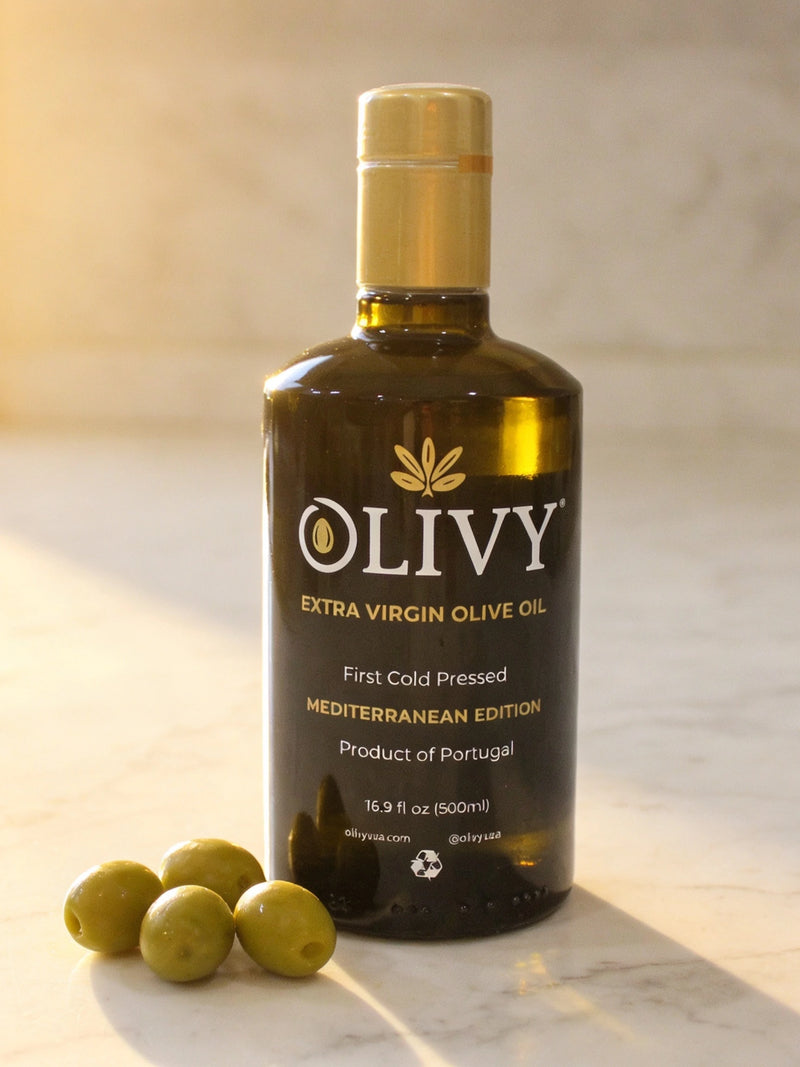
That's the practice behind our own numbers. Every Olivy harvest is analysed by the Laboratório de Estudos Técnicos at the Instituto Superior de Agronomia, University of Lisbon — an independent lab — and the full report is published with its batch number on our proof page. The current harvest of the Mediterranean Edition tested at 439 mg/kg total polyphenols, with 0.11% free acidity and a peroxide value of 6.2 meq/kg.
Olive oil isn't the only route, either. If you're building a broader pattern rather than optimising one bottle, our guide to foods high in polyphenols covers where else they show up and how much actually gets absorbed.
Frequently asked questions
What are the proven benefits of olive oil polyphenols?
The one claim authorised by European regulators is that olive oil polyphenols contribute to the protection of blood lipids from oxidative stress, for oils containing at least 5 mg of hydroxytyrosol and derivatives per 20 g, at a daily intake of 20 g of olive oil. Other areas — cardiovascular outcomes, inflammation, cognition — have supportive research, but the evidence is not conclusive and much of it tests a whole dietary pattern rather than olive oil alone.
How much olive oil do you need for the polyphenol benefit?
The EU claim specifies a daily intake of 20 g of olive oil — roughly 1½ tablespoons — from an oil meeting the phenolic threshold. The FDA's qualified claim for high-oleic oils uses the same 20 g figure, and specifies that the oil should replace fats higher in saturated fat rather than being added to an existing diet.
Does olive oil really work like ibuprofen?
Not in any practical sense. Oleocanthal, the compound behind olive oil's peppery finish, inhibits COX enzymes through a mechanism similar to ibuprofen's, as reported in Nature in 2005. But about 50 g of extra virgin olive oil provides roughly 10 mg of oleocanthal — on the order of 10% of a standard ibuprofen dose. It is not a substitute for medication.
Do refined and light olive oils have polyphenols?
Almost none. Refining removes nearly all phenolic content, leaving refined, "light," and "pure" olive oils typically in the range of 0–5 mg/kg. Any research on olive oil polyphenols applies to extra virgin olive oil, not to refined grades.
Does cooking destroy olive oil polyphenols?
Heat reduces them, and the loss increases with temperature and cooking time. Using extra virgin olive oil raw — drizzled over food after cooking — preserves the most phenolic content, which is why finishing use is where the polyphenol argument is strongest.
Written by The Olivy Kitchen. Every claim here ties to a published lab report or a cited source.
This article is for general educational purposes and isn't medical or nutritional advice. Every study and regulatory position described above is linked to its original source so you can read it yourself. Talk to your doctor or a registered dietitian about your individual needs.
If the phenolic number on a bottle matters to you, it's worth seeing one that's been independently measured — every Olivy harvest's lab report is public, and the Mediterranean Edition ships with the batch number that matches it.
Sources
- Commission Regulation (EU) No 432/2012 — olive oil polyphenols and protection of blood lipids from oxidative stress
- Estruch et al., "Primary Prevention of Cardiovascular Disease with a Mediterranean Diet Supplemented with Extra-Virgin Olive Oil or Nuts," NEJM (2018, republished)
- Harvard T.H. Chan School of Public Health — PREDIMED retraction and republication
- Beauchamp et al., "Ibuprofen-like activity in extra-virgin olive oil," Nature 437:45–46 (2005)
- FDA — Qualified health claim for oleic acid and reduced risk of coronary heart disease (2018)
- International Olive Council — trade standard applying to olive oils
- Olivy — published lab results (439 mg/kg polyphenols, 0.11% acidity, 6.2 meq/kg peroxide, University of Lisbon)