Types of Olive Oil: What Each Grade Means and Which One to Buy

There are several types of olive oil on shelves. The differences between them aren't just marketing — they reflect fundamentally different production methods, flavor profiles, and health properties.
Knowing what each type actually is makes it easier to buy the right one for the right purpose, and to avoid paying premium prices for a product that doesn't deliver premium quality.
The Types of Olive Oil, Explained
Extra Virgin Olive Oil (EVOO)
The highest grade. To qualify as extra virgin, olive oil must:
- Be produced purely by mechanical means — no chemicals, no heat treatment
- Have a free fatty acid content below 0.8%
- Pass sensory evaluation — no defects in taste or smell
- Be from the first cold pressing
These standards are set by the International Olive Council (IOC). (IOC Standards)
Extra virgin olive oil retains all of its natural polyphenols — oleocanthal, hydroxytyrosol, oleuropein — because it hasn't been refined. That's what makes it the only grade with meaningful health properties beyond basic fat content.
Quality varies significantly within the extra virgin category. An early-harvest, single-origin EVOO with 500+ mg/kg polyphenols is a very different product from a grocery-store EVOO that technically meets the minimum standard but contains almost no phenolic compounds.
Virgin Olive Oil
The second grade. Virgin olive oil is also mechanically extracted and unrefined. But its free fatty acid content can be up to 2% — higher than extra virgin — and it may have minor sensory defects.
It's less common on retail shelves in North America. In European markets, it occupies a mid-tier position between extra virgin and refined oils. Virgin olive oil still contains some polyphenols, but typically fewer than a good EVOO.
Refined Olive Oil
Refined olive oil starts as oil that failed to meet virgin standards — too high in acidity, off-flavors, or both. It's then treated with heat, chemicals, and filtration to neutralize the defects.
The result is a neutral-tasting oil with a high smoke point (~465°F) but almost no polyphenols. The refining process removes the compounds that give EVOO its flavor and health properties. Refined olive oil is essentially a neutral fat with the basic oleic acid profile of olive oil — no more.
Pure Olive Oil / Classic Olive Oil
This is usually a blend of refined olive oil and a small percentage of virgin olive oil (added for flavor and color). The label "pure" is technically accurate — it contains only olive oil — but it's not a quality designation. Most bottles labeled "pure olive oil" or "classic olive oil" are primarily refined.
Light Olive Oil / Extra Light Olive Oil
"Light" refers to flavor, not calories. This is refined olive oil, sometimes with a tiny amount of EVOO added. It has almost no olive flavor, a high smoke point, and virtually no polyphenols. It's marketed toward people who want a neutral oil but prefer to stay within the olive category.
Olive Pomace Oil
The lowest grade. Pomace oil is extracted from the pressed olive paste after mechanical extraction — the solid material left behind. Because there's very little oil remaining, it's extracted using chemical solvents (hexane). The resulting oil is then refined.
Pomace oil is safe to consume but has none of the flavor or health properties of EVOO. It's primarily used in commercial food production and industrial frying.
Types of Olive Oil: Comparison Table
|
Type |
Extraction |
Free Acidity |
Polyphenols |
Best Use |
|---|---|---|---|---|
|
Extra Virgin |
Mechanical, cold-pressed |
< 0.8% |
High (varies) |
Raw, finishing, medium-heat cooking |
|
Virgin |
Mechanical |
< 2% |
Moderate |
Cooking, dressings |
|
Refined |
Chemical/heat |
Low (corrected) |
Negligible |
High-heat cooking |
|
Pure / Classic |
Blended |
Varies |
Very low |
General cooking |
|
Light / Extra Light |
Refined blend |
Low |
None |
Neutral cooking |
|
Pomace |
Solvent + refined |
Low |
None |
Industrial frying |
Which Type Should You Buy?
For health benefits: Extra virgin olive oil, with the highest polyphenol content you can find. Look for early-harvest, single-origin, with a harvest date on the label.
For high-heat frying: Refined olive oil or avocado oil if you need a high smoke point and are frying in large volumes. But for everyday shallow frying, high-quality EVOO handles it well. (See our full guide on EVOO for frying →)
For dressings and raw use: The best EVOO you have. This is where the flavor and phenolic character are fully expressed.
For budget general cooking: Pure or classic olive oil if cost is the primary concern — but you won't get the health properties of EVOO.
What Most "Extra Virgin" Bottles Don't Tell You
Meeting the minimum EVOO standard doesn't mean the oil is high quality. Many mass-market EVOOs are made from late-harvest, over-ripe olives, blended across regions, and stored for months before reaching shelves. They pass the technical threshold but contain almost no active compounds.
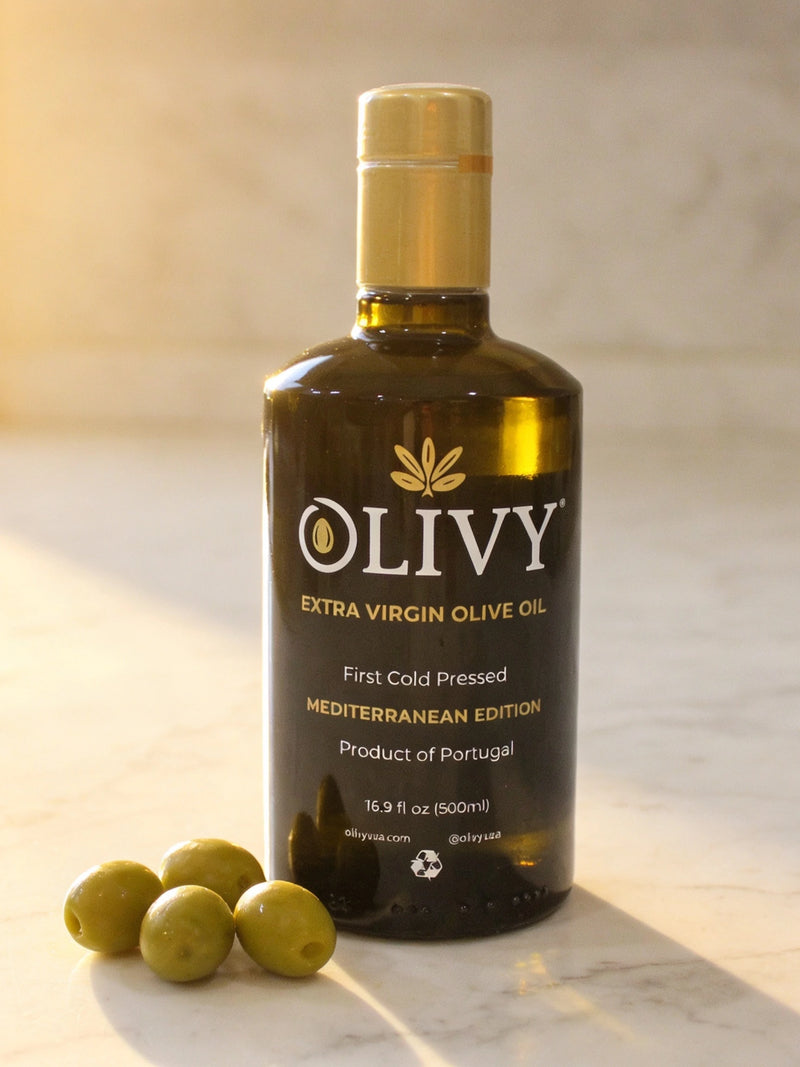
Olivy is a single-origin, early-harvest Portuguese EVOO — the type that sits at the top of the extra virgin category, not the minimum.
Also read: Polyphenol Rich Foods →