Lemon Extra Virgin Olive Oil: How It's Made, How to Use It, and What to Buy

Lemon extra virgin olive oil occupies a specific place in the kitchen — more versatile than plain EVOO for certain applications, with a flavor profile that's genuinely useful for raw preparations, fish, and light dishes.
But the quality difference between a well-made lemon EVOO and a cheaply infused version is significant. Here's what separates them and how to use either one well.
How Lemon Extra Virgin Olive Oil Is Made
Agrumato Method (Cold Co-Pressed)
The agrumato method is the traditional Italian production technique. Fresh lemons — whole, including the peel — are crushed simultaneously with olives during the first pressing. The lemon oils, acids, and aromatics integrate directly into the olive oil at the point of extraction.
The result is a fully unified flavor. The lemon isn't added to olive oil — it's extracted from the fruit alongside the oil, so the citrus character is chemically bonded to the fat rather than sitting on top of it. Agrumato lemon EVOO is more expensive to produce and more expensive to buy. It's also more stable — the flavor doesn't fade or separate over time the way infused oils can.
Infused Method
Infused lemon olive oil is made by steeping lemon zest, lemon extract, or food-grade lemon flavoring in already-pressed olive oil. The flavor is applied after extraction rather than integrated during it.
Quality varies widely in this category. High-end infusions use fresh lemon zest and high-quality base oil. Lower-end versions use natural flavoring compounds or synthetic citrus flavor added to refined oil.
A fast way to distinguish them: agrumato oils have a complex, layered lemon character with herbal depth. Infused oils often taste more one-dimensional — like lemon candy rather than fresh lemon.
Lemon Extra Virgin Olive Oil vs. Plain EVOO: When to Use Each
The lemon version isn't a replacement for plain EVOO — it's an addition for specific uses.
| Use Case | Plain EVOO | Lemon EVOO |
|---|---|---|
| Raw salad dressing | ✅ Excellent | ✅ Excellent (replaces lemon juice component) |
| Finishing grilled fish | ✅ Good | ✅✅ Better — citrus brightens the fish |
| Drizzling on pasta | ✅ Excellent | ⚠️ Depends on sauce — too bright for tomato-based |
| Roasted vegetables | ✅ Excellent | ✅ Good — especially asparagus, artichoke, zucchini |
| Dipping bread | ✅ Excellent | ✅ Good |
| Baking | ✅ Good | ⚠️ Use only in explicitly citrus-forward baked goods |
| High-heat cooking | ✅ Good | ⚠️ Citrus volatiles dissipate under heat — use plain EVOO |
The clearest use case for lemon EVOO is anywhere you'd normally use both olive oil and lemon juice together — seafood, light salads, steamed or grilled vegetables, crostini.
Does Lemon EVOO Retain the Health Benefits of Plain EVOO?
For agrumato oils: yes, largely. Because the olive oil is still produced by cold-press extraction from quality olives, the base polyphenol content is comparable to a plain EVOO of similar origin and harvest.
For infused oils made with a high-quality EVOO base: the polyphenol content depends entirely on the base oil used. If the producer starts with a fresh, high-polyphenol EVOO, the health profile is similar to plain EVOO. If they start with refined oil or a low-grade base, the polyphenols were never there.
For infused oils made with refined base oil: the health benefits are minimal — you're getting flavored fat, not a functional food. What makes EVOO high in polyphenols →
How to Use Lemon Extra Virgin Olive Oil
Seafood
Drizzle over grilled salmon, sea bass, or shrimp immediately before serving. The citrus brightens the fish and replaces the need for a separate acid component. Use about 1 tablespoon per portion.
Salad Dressing
Replace the acid component of a vinaigrette with lemon EVOO. Mix 3 tablespoons lemon EVOO with a small pinch of salt, cracked pepper, and a tiny amount of Dijon to emulsify. Works especially well on arugula, endive, and shaved fennel.
Steamed Vegetables
Drizzle over asparagus, broccoli, or green beans immediately after steaming. The oil coats the vegetables and the lemon lifts the flavor without masking it.
White Bean Dishes
White beans dressed with lemon EVOO, fresh herbs, and flaky salt is a simple dish where the oil is fully front and center. Use generously — 2–3 tablespoons per cup of beans.
Crostini and Bruschetta
Drizzle over toasted bread with ricotta, fresh herbs, or sliced stone fruit. The citrus integrates naturally with dairy and fruit combinations.
What to Look For When Buying Lemon EVOO
Check the Production Method
Look for "agrumato," "co-pressed," or "whole fruit pressed" on the label. These phrases confirm the lemon was integrated at extraction — not added afterward.
Check the Base Oil
If it's an infused oil, the base oil should be identified. Look for "extra virgin olive oil" as the base — not "olive oil" or "refined olive oil."
Check for Artificial Flavoring
Ingredient lists that include "natural lemon flavor," "lemon oil extract," or "citrus flavoring" are not using whole fruit. These can still taste fine but won't deliver the complexity of an agrumato oil.
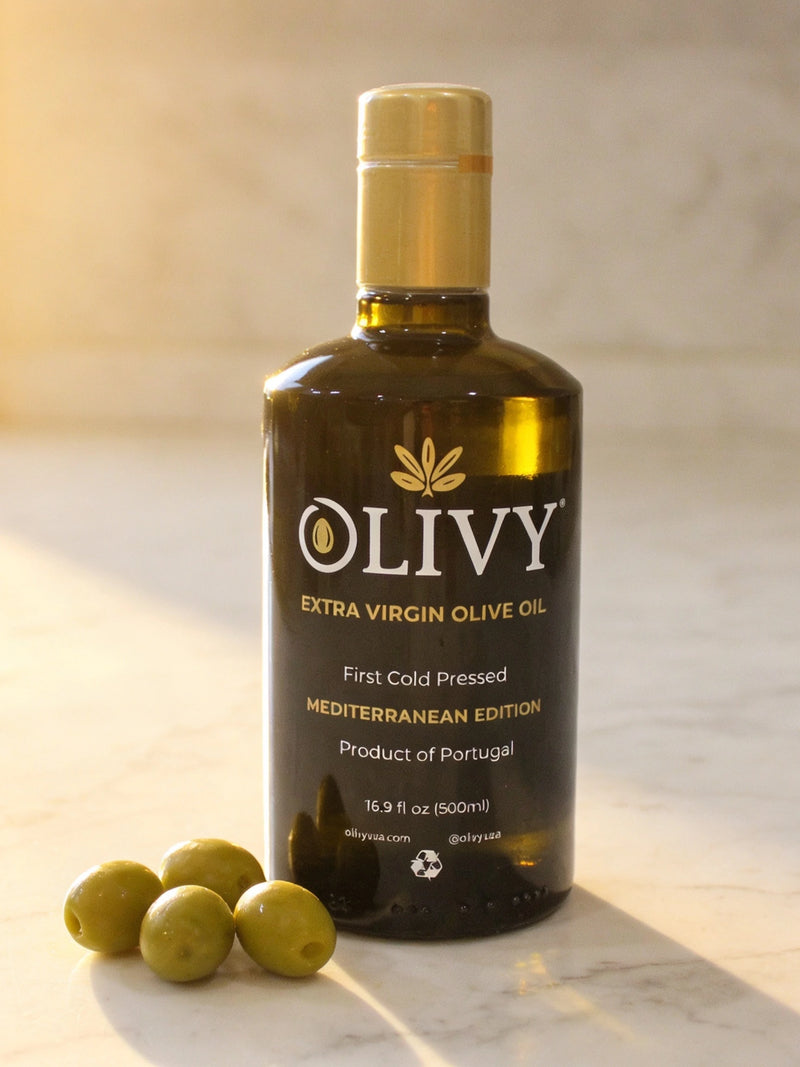
Plain Olivy EVOO + Lemon: A Simple Alternative
Olivy doesn't produce a lemon variant — but a squeeze of fresh lemon juice over Olivy EVOO achieves a similar effect in most applications, with the added control of adjusting the citrus-to-oil ratio per dish. Shop Olivy →
For dressings and seafood finishing, combining fresh lemon with a high-quality EVOO is often indistinguishable from a lemon-infused oil — and always uses the freshest possible lemon character.
Also read: Extra Virgin Olive Oil Salad Dressing →| EVOO: What It Is →