Lab-Tested Olive Oil: Why Third-Party Reports Matter

A lab-tested olive oil is one whose chemistry has been measured by an analytical laboratory — and a third-party report is the only version of that claim you can actually check. The tests cover free acidity, peroxide value, UV absorbance at K232 and K270, a fatty-acid profile, and often total polyphenols, plus a trained sensory panel. Together they describe whether an oil is genuinely extra virgin, how fresh it is, and whether anything has been blended in. The distinction that matters isn't tested versus untested — almost every producer tests something. It's whether an independent lab ran it, whether the report covers the batch in your hand, and whether you're allowed to read it.
Lab tested olive oil: what the full panel covers

The International Olive Council trade standard defines what an oil must satisfy to be sold as extra virgin. A lab panel tests against those thresholds and usually a few things beyond them.
| Test | What it measures | Extra virgin limit |
|---|---|---|
| Free acidity | Free fatty acids released when fruit is bruised, fermented, or pressed late — a handling record | ≤ 0.8% |
| Peroxide value | Primary oxidation — how much heat, light, and air the oil has met since pressing | ≤ 20 meq O₂/kg |
| K232 | UV absorbance flagging early oxidation products | ≤ 2.50 |
| K270 | UV absorbance flagging later oxidation — and refined oil blended into virgin oil | ≤ 0.22 |
| Fatty acid profile | The oil's compositional fingerprint; off-profile results suggest a non-olive oil is present | Defined ranges per fatty acid |
| Sensory panel | Trained tasters scoring fruitiness and screening for defects | Zero defects; fruitiness above zero |
| Total polyphenols | Antioxidant content — quality and shelf-life relevant, but not part of the grade | No limit; typically 100–500 mg/kg |
Two things are worth pulling out of that table.
The parameters measure different things, and people routinely conflate them. Free acidity is a record of how the fruit was handled — picked gently, pressed quickly, kept cool. Peroxide value and the K-values are a record of oxidation since pressing. Polyphenols are a measure of antioxidant content that survived from tree to bottle. An oil can score beautifully on acidity and still be phenol-poor, because they answer different questions. We take that apart in does low acidity olive oil have more polyphenols.
K270 does something no palate can. Refining leaves a UV signature. If refined oil has been blended into virgin oil to stretch it, K270 climbs even when the blend tastes unremarkable. It's one of the few purely analytical defences against adulteration.
Who runs the tests, and why "third-party" is the load-bearing word
Most serious producers run some analysis. The question is who, and with what independence.
- In-house testing. The producer's own bench, or the mill's. Genuinely useful for production decisions — it's how you know when to stop pressing. But the producer both performs and interprets it, so as evidence to a buyer it's self-reported.
- Independent commercial or university laboratory. An outside lab with no stake in the result, running accredited methods. This is what "third-party tested olive oil" should mean.
- Certification schemes. Protected designations like DOP, or a national scheme, involve independent verification against a published specification. Broader than a chemistry panel — they cover origin and process too — but usually less frequent than per-batch testing.
The gap between the first and second is where most of the ambiguity in this category lives. "Lab tested" appears on a lot of labels and is technically true of nearly all of them. It becomes meaningful when you can name the lab, read the report, and match it to a batch.
One thing an independent lab is not: a regulator. No lab certifies or approves an oil in the sense of granting it official status. It measures, and it reports. That's the whole value — the number is what it is, and the producer doesn't get to negotiate it.
How to read an olive oil lab report
Lab reports look forbidding and are mostly not. Here's the order to read one in.
1. Find the sample identity
A report should name the sample, a batch or lot number, and the date it was received. If you can't tie the report to the bottle in your hand, it's describing some oil, not necessarily yours. This is the single most common weakness in published reports — a beautiful panel with nothing connecting it to what shipped.
2. Check the date against the harvest
Oil changes. A panel run at pressing describes the oil then; peroxide value in particular climbs with time and exposure. A report from two harvests ago tells you about a good year, not about this bottle.
3. Read each result against its limit, not in isolation
Reports usually print the measured value beside the regulatory maximum. That's the comparison that carries meaning. A free acidity of 0.11% against a 0.8% ceiling is roughly seven times below the limit. A peroxide value of 6.2 against a 20 meq/kg maximum leaves a wide margin. Numbers without their thresholds are hard to interpret and easy to dress up.
4. Note the method used
Especially for polyphenols. There's no single universal method for quantifying total phenolic content, and different extraction and quantification approaches produce different figures for the same oil. Two brands' polyphenol numbers aren't strictly comparable unless the methods match. Any honest treatment of the topic says so.
5. Check what's missing
A partial panel is a choice. If a report shows acidity and polyphenols but omits peroxide value and the K-values, you've been shown the flattering half. A full panel is the one worth trusting.
The part a machine can't do: the sensory panel
Chemistry alone doesn't determine the grade. An oil must also pass a trained sensory panel — typically eight or more assessors, tasting from cobalt-blue glasses so colour can't bias them, scoring fruitiness and screening for the defect categories: rancid, fusty, musty, winey.
This matters because of what the 2010 UC Davis Olive Center study actually found. When 69% of imported "extra virgin" samples failed to meet the standard, the failures were largely sensory — oils that were oxidised or fermented, and therefore no longer extra virgin, whatever the label said. The chemistry can pass while the panel fails, because some defects register on the palate before they register on the instruments.
If you want to build your own version of that skill, the method transfers surprisingly well to a kitchen — we walk through it in how to evaluate EVOO like a professional.
Why per-batch testing changes the meaning of the number
Olive oil is an agricultural product. Rain, heat, when the fruit was picked, how long it waited before pressing — each harvest is genuinely different, and a single flattering analysis from one good year doesn't describe the next.
So there are two quite different practices sharing one phrase:
- Tested once — an analysis exists, usually from a launch batch, and it's referenced indefinitely.
- Tested every batch — every pressing is analysed before it ships, and the numbers are allowed to move.
The second is more expensive and more exposing, because it means publishing a year that came in lower. That's precisely what makes it evidence. A brand that only ever shows one number is showing you its best one.
What to ask a producer for
You don't need to be an expert to get a useful answer. Email and ask for four things:
- The full panel for the batch you're buying — acidity, peroxide, K232, K270, and polyphenols if they measure them.
- The name of the laboratory. Independent, or in-house?
- The date of the analysis and the harvest it covers.
- The batch number, so you can match it to the bottle.
The reply tells you a lot regardless of what's in it. A producer who tests routinely sends a PDF within a day, because it already exists. A producer who doesn't will offer reassurance instead of a document — which isn't dishonest, but it isn't verification either. Pair this with the label checks in how to spot real extra virgin olive oil and you can assess almost any bottle without leaving your kitchen.
What we publish, and why
Every Olivy harvest is analysed by the Laboratório de Estudos Técnicos at the Instituto Superior de Agronomia, University of Lisbon. It's an independent university laboratory — not ours, and not paid to reach a conclusion. The full report goes up on our proof page as it comes back, with the batch number attached, so the bottle on your counter traces to the document you're reading. The published batches include February 2025, PDO Trás-os-Montes, batch #866.00/25, and January 2025, Lote 2, batch #259.00/25.
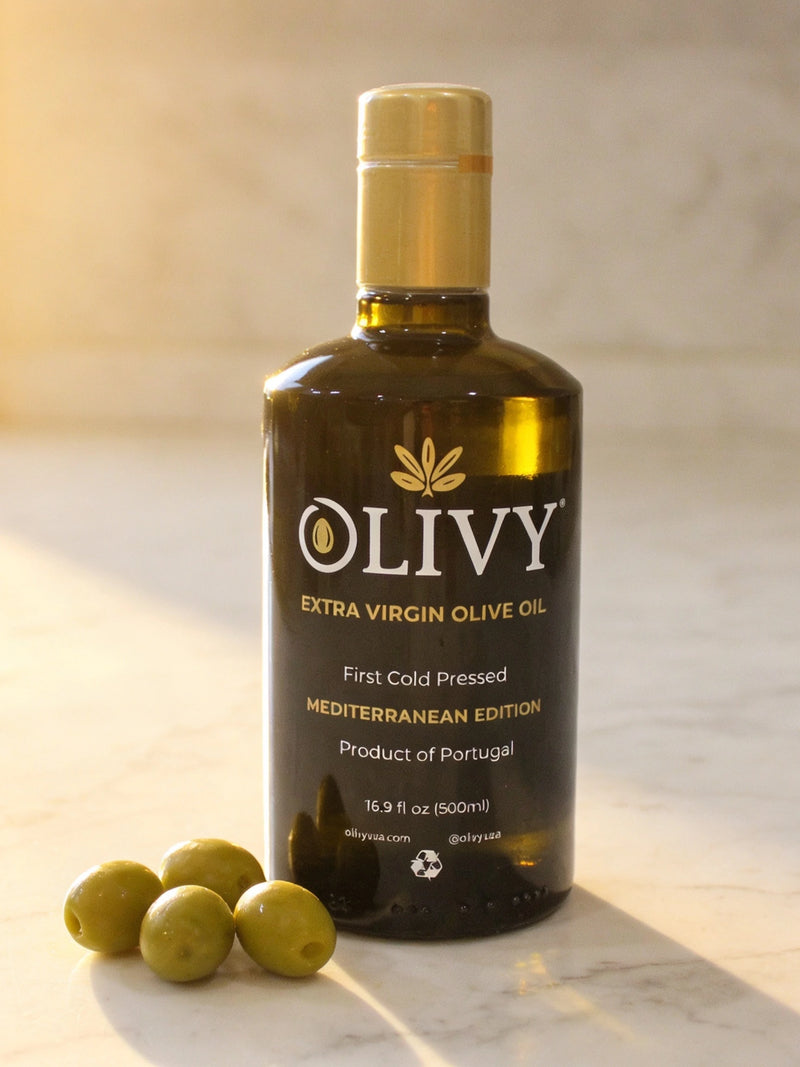
For the current harvest of the Mediterranean Edition, the panel reads: 0.11% free acidity against the 0.8% extra virgin ceiling, 6.2 meq/kg peroxide value against a 20 meq/kg limit, and 439 mg/kg total polyphenols against the EU's 250 mg/kg health-relevance reference. What the polyphenol figure means in practice is covered in are high-polyphenol olive oils worth it.
We publish the whole report rather than the three good numbers because a selected number is a marketing decision and a full panel isn't. It's also the only way the claim stays honest across harvests we haven't had yet.
Frequently asked questions
What does lab-tested olive oil actually mean?
It means an analytical laboratory measured the oil's chemistry — typically free acidity, peroxide value, UV absorbance at K232 and K270, and the fatty-acid profile, sometimes with total polyphenols. On its own the phrase doesn't specify who ran the tests or whether you can see the results, which is why the useful version is a third-party report you can read and match to a batch number.
What's the difference between lab-tested and third-party tested olive oil?
Lab-tested can include a producer's own in-house analysis, where the same party performs and interprets the test. Third-party tested means an independent laboratory with no stake in the outcome ran it. Both are legitimate practices, but only the second is evidence a buyer can weigh independently.
Does an olive oil lab report prove the oil is extra virgin?
A chemistry panel proves the oil meets the chemical thresholds. Full extra virgin status also requires passing a trained sensory panel, since defects like rancidity and fermentation can be present in an oil whose chemistry still passes. A complete assessment includes both.
How often should olive oil be tested?
Every batch, ideally. Olive oil is an agricultural product and each harvest differs in acidity, phenolic content, and freshness, so a single historic analysis doesn't describe a later pressing. Per-batch testing with the batch number printed on the bottle lets a buyer match the oil to its report.
Can I have my own olive oil tested?
Yes — independent food laboratories will run a chemical panel on a consumer sample, though it typically costs more than the bottle. For most households the practical route is asking the producer for the existing report for that batch, which costs nothing and tells you both the numbers and whether they keep them.
Written by The Olivy Kitchen. Every claim here ties to a published lab report or a cited source.
If you'd like to see a full panel rather than a selected number, every Olivy harvest's report is public — and the Mediterranean Edition carries the batch number that matches it.
Sources
- International Olive Council — trade standard applying to olive oils and olive-pomace oils
- UC Davis Olive Center — Evaluation of extra virgin olive oil sold in California (2010)
- USDA AMS — Olive Oil and Olive-Pomace Oil Grades and Standards
- Commission Regulation (EU) No 432/2012 — olive oil polyphenols
- Olivy — published lab reports (batches #866.00/25 and #259.00/25, University of Lisbon)