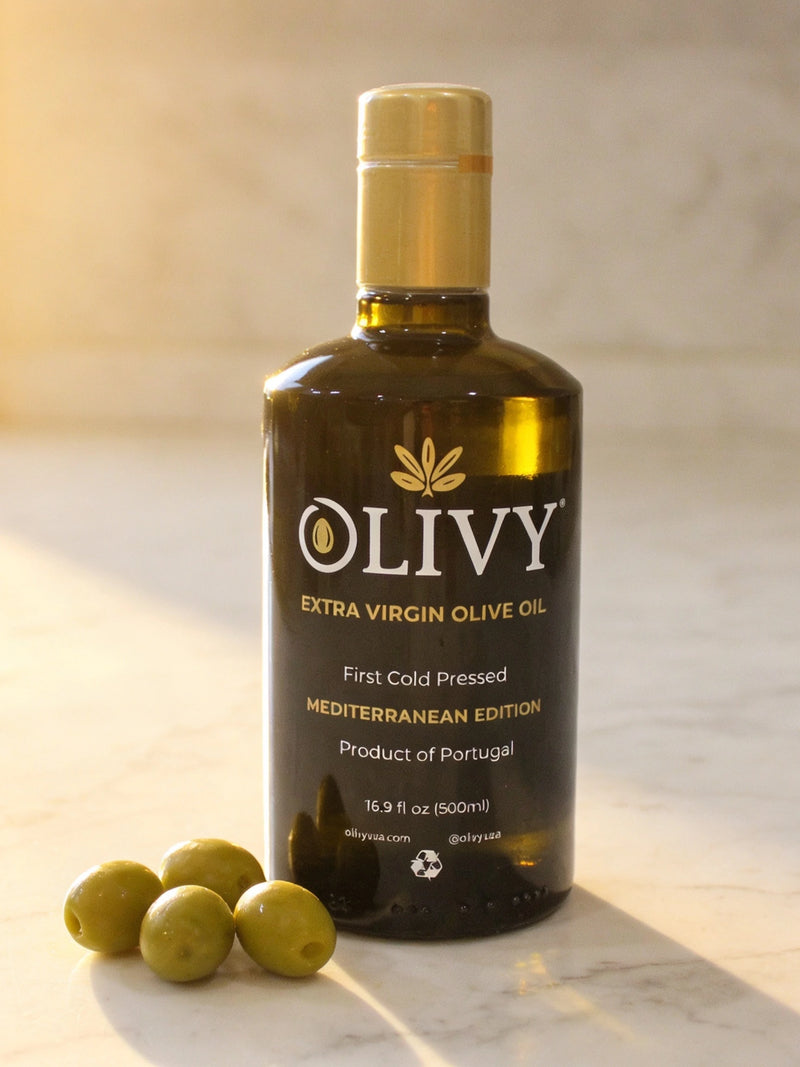
Are High-Polyphenol Olive Oils Worth It? What the Lab Numbers Actually Mean

A high polyphenol olive oil is worth the premium if — and only if — the number is verified and the oil is fresh. Polyphenols are the antioxidant compounds olives make naturally, measured in milligrams per kilogram of oil. The EU treats roughly 250 mg/kg as the level where they become health-relevant; genuinely high-phenolic oils typically run above 300 mg/kg, and our current harvest is independently tested at 439 mg/kg. But the figure decays with age and light, it isn't part of the extra virgin grade, and an unverified number on a label is just a marketing claim. Here's what the measurement actually means, what the research supports, and how to tell a real number from a printed one.
What are polyphenols in olive oil?

Polyphenols are a family of compounds the olive tree produces as a defence — against pests, drought, and ultraviolet light. They're bitter and astringent by design, which is exactly why a raw olive is inedible and why a phenol-rich oil bites at the back of your throat.
When olives are crushed and the oil separated mechanically, a fraction of those compounds carries over into the oil. Only a fraction: most polyphenols are water-soluble and leave with the vegetation water. What survives in extra virgin olive oil is a small group doing outsized work — principally hydroxytyrosol and tyrosol and their derivatives (including oleuropein and oleocanthal), which is why lab reports and regulations tend to be written in those terms.
Two consequences follow, and both matter for whether a premium is justified.
First, polyphenols are what keep the oil from going rancid. They're antioxidants inside the bottle before they're anything else — a phenol-rich oil has a longer usable life than a phenol-poor one under identical storage.
Second, refining destroys them. Refined, "light," and "pure" olive oils are stripped of nearly all phenolic content in processing, ending up in the range of 0–5 mg/kg. That's the single largest quality gap in the category, and it doesn't show up in taste the way you'd expect — refined oil tastes of very little, which some people read as "smooth."
What mg/kg means, and what counts as high
"mg/kg" is milligrams of total polyphenols per kilogram of oil. You'll also see it written as ppm — parts per million — which is the same measurement in different clothes. A figure of 439 mg/kg and a figure of 439 ppm are identical.
| Level (mg/kg) | What it signals |
|---|---|
| 0–5 | Refined, "light," or "pure" olive oil — phenolics removed in processing |
| 50–200 | Common range for late-harvest, older, or gently-made supermarket extra virgin |
| ~250 | The EU reference point where polyphenols become health-relevant |
| 300–500 | Genuinely high-phenolic territory; typically early-harvest and recently pressed |
| 500+ | Uncommon; often intensely bitter and pungent, closer to a supplement than a table oil |
The 250 mg/kg anchor is worth understanding precisely, because it's the closest thing to an official threshold. Commission Regulation (EU) No 432/2012 permits a specific claim about olive oil polyphenols and blood lipids, but only for oils containing at least 5 mg of hydroxytyrosol and its derivatives per 20 g of oil. Converted to the units on a lab report, that works out to roughly 250 mg/kg — which is where the number in circulation comes from.
Note what the regulation is careful about, though. It specifies hydroxytyrosol and derivatives, not "total polyphenols," and different labs use different extraction and quantification methods. Two reports can describe the same oil with different numbers if the methods differ. This is a real limitation in the category and worth knowing before you compare two brands' figures as if they were interchangeable.
Why two extra virgin oils can differ tenfold
Both bottles can be legitimately extra virgin and one can have five times the polyphenol content of the other. Polyphenol content is simply not part of the grade — the extra virgin standard governs free acidity, peroxide value, UV absorbance, and a sensory panel, none of which measure phenolics. Four things drive the difference.
Harvest timing
This is the biggest lever. Green, unripe olives are dense in polyphenols; as the fruit ripens to purple and black, phenolic content falls while oil yield rises. Early harvest means less oil per tree and a more expensive litre — and substantially more of what you're paying for. Late-harvest oils rarely exceed 200 mg/kg.
Variety and terroir
Cultivar matters, and so does where it grew: altitude, water stress, and sun exposure all push the tree to produce more defensive compounds. A drier, higher, harder growing season tends to yield a more phenolic oil.
How fast it was pressed
Olives begin degrading the moment they leave the tree. Fruit pressed within hours retains far more phenolic content than fruit that sat in bins for days — the same handling discipline that keeps free acidity low, which is why the two numbers often move together even though they measure different things. We untangle that relationship in does low acidity olive oil have more polyphenols.
Age and storage
Polyphenols decline from the day of pressing. Heat, oxygen, and especially light accelerate it — which is why clear glass is a meaningfully worse container than dark glass or tin, and why a harvest date on the label tells you more than a best-by. A number measured at pressing describes the oil then, not the bottle on your counter eighteen months later.
What the research actually supports
This section describes published research findings. It isn't medical or nutritional advice — see the note at the end.
Here's where the category tends to overreach, so it's worth being precise about what has been shown and what hasn't.
The EU claim is narrow and specific. Regulation 432/2012 authorises one statement: that olive oil polyphenols "contribute to the protection of blood lipids from oxidative stress," for oils meeting the 5 mg/20 g threshold, with a stated daily intake of 20 g of olive oil. That is the entire authorised scope — not a claim about heart disease, inflammation, or longevity.
The largest dietary trial is about the whole diet, not the bottle. PREDIMED followed 7,447 Spanish adults at high cardiovascular risk and found that a Mediterranean diet supplemented with extra virgin olive oil was associated with a lower incidence of major cardiovascular events than a reduced-fat control diet. Two honest caveats: the trial was retracted and republished in 2018 after irregularities were found in how some participants were randomised, with the reanalysis reaching broadly similar conclusions; and the intervention was a dietary pattern, not olive oil in isolation.
Oleocanthal is a real finding, frequently overstated. Beauchamp and colleagues reported in Nature in 2005 that oleocanthal — the compound responsible for that throat sting — inhibits COX enzymes in a manner pharmacologically similar to ibuprofen. Important context: roughly 50 g of extra virgin olive oil provides about 10 mg of oleocanthal, which corresponds to around 10% of a standard ibuprofen dose. It is a genuinely interesting mechanism. It is not a painkiller, and no one should treat it as one.
The US regulatory position is deliberately hedged. The FDA permits a qualified health claim for high-oleic oils, and the required wording opens with "supportive but not conclusive scientific evidence suggests" — and depends on the oil replacing saturated fat rather than being added on top of an existing diet. That qualifier is doing real work, and it's the honest summary of where the evidence sits.
The reasonable position: polyphenols are the most studied and most plausible reason to prefer a well-made extra virgin oil, the evidence is supportive rather than settled, and any brand telling you their bottle prevents disease has left the evidence behind.
You can taste polyphenols — here's how

Two of the three positive attributes on a professional tasting sheet are direct sensory readouts of phenolic content:
- Bitterness — felt on the sides and back of the tongue. Comes largely from oleuropein derivatives.
- Pungency — the peppery catch at the back of the throat, sometimes sharp enough to make you cough. Largely oleocanthal.
Neither is a flaw. Both are routinely mistaken for one, because most people's reference point is an oil that has lost its phenolic content, where "smooth" reads as correct. Pour a teaspoon into a small glass, cup it in your palm to warm it, sip, and draw air across it. If nothing happens at the back of your throat, there isn't much phenolic content there — regardless of the number on the label. The full method is in how to evaluate EVOO like a professional.
Your palate won't give you a figure. It will tell you whether a figure is plausible, which is more useful than it sounds.
How to know the number is real
Since polyphenol content isn't part of the extra virgin grade, nobody is checking it unless the producer chooses to have it checked. A number printed on a label without a report behind it hasn't been verified by anyone.
Three questions settle it:
- Is there a report, and can you read it? Not a claim on the label — the actual analysis, with a batch number.
- Who ran it? An independent lab, not the producer's own bench.
- Which harvest does it describe? A polyphenol figure without a harvest date attached could describe a pressing from three years ago.
This is the practice we built the brand around. Every Olivy harvest is analysed by the Laboratório de Estudos Técnicos at the Instituto Superior de Agronomia, University of Lisbon — independent of us — and the full report goes up on our proof page with its batch number, so the bottle in your hand ties back to the document. The current harvest of the Mediterranean Edition tested at 439 mg/kg total polyphenols, alongside 0.11% free acidity and a peroxide value of 6.2 meq/kg. If you want the wider version of this argument, we made it in how to spot real extra virgin olive oil.
So — is a high polyphenol olive oil worth the money?
Worth it, if three things are true: the number is verified by an independent report, the harvest is recent, and you're going to use the oil raw often enough to notice. Early harvest costs more because it yields less oil per tree — that price difference is real production economics, not positioning.
Not worth it if you're buying primarily to cook at high heat, where phenolic content degrades and the premium is largely wasted; if the bottle is unverified, in which case you're paying for a claim; or if it's going to sit open for a year, since the number you paid for will be materially lower by the time you reach the bottom.
A sensible split that a lot of households land on: an everyday oil for the pan, and one verified high-phenolic bottle for finishing — where you actually taste it, and where the compounds are intact.
Frequently asked questions
What counts as a high polyphenol olive oil?
Around 250 mg/kg is the EU reference point where polyphenols are considered health-relevant, and oils above roughly 300 mg/kg are commonly described as high-phenolic in the scientific literature. Below about 200 mg/kg is typical of late-harvest or older extra virgin oil, and refined or "light" olive oils contain almost none — usually 0–5 mg/kg.
Is a higher polyphenol number always better?
Not automatically. Very high figures come with pronounced bitterness and pungency that not everyone enjoys on a table oil, and the number tells you nothing about freshness or whether the oil was well made. A verified 400 mg/kg oil from a recent harvest is a better bottle than an unverified 600 mg/kg claim on an undated one.
Do polyphenols disappear when you cook with olive oil?
They decline with heat, and the longer and hotter the cooking, the more is lost. This is why phenol-rich oils are usually recommended for finishing — drizzled over food after cooking — where the compounds and the flavour both survive intact.
How long does a high-polyphenol olive oil keep its polyphenols?
Phenolic content declines steadily from pressing, and research on stored oils shows meaningful loss over 12–18 months, accelerated by light, heat, and oxygen. Dark glass, a cool cupboard, and using the bottle within a few months of opening all slow it down.
Does mg/kg mean the same thing as ppm?
Yes — milligrams per kilogram and parts per million are the same measurement expressed differently. A 439 mg/kg result and a 439 ppm result describe identical polyphenol content.
Written by The Olivy Kitchen. Every claim here ties to a published lab report or a cited source.
This article is for general educational purposes and isn't medical or nutritional advice. Talk to your doctor or a registered dietitian about your individual needs.
If you want to see what a verified polyphenol number looks like, every Olivy harvest's lab report is public — and the Mediterranean Edition ships with the batch number that matches the one you're reading.
Sources
- Commission Regulation (EU) No 432/2012 — olive oil polyphenols and protection of blood lipids from oxidative stress
- Estruch et al., "Primary Prevention of Cardiovascular Disease with a Mediterranean Diet Supplemented with Extra-Virgin Olive Oil or Nuts," NEJM (2018, republished)
- Harvard T.H. Chan School of Public Health — PREDIMED retraction and republication
- Beauchamp et al., "Ibuprofen-like activity in extra-virgin olive oil," Nature 437:45–46 (2005)
- FDA — Qualified health claim for oleic acid and coronary heart disease (2018)
- International Olive Council — trade standard applying to olive oils
- Olivy — published lab results (439 mg/kg polyphenols, 0.11% acidity, 6.2 meq/kg peroxide, University of Lisbon)