Olive Oil Acidity Explained: What 0.11% Really Tells You

Olive oil acidity is the percentage of free fatty acids in the oil by weight — and despite the name, it is not something you can taste. It is a record of how the fruit was treated: picked gently or roughly, milled within hours or left sitting, sound or already fermenting. The International Olive Council caps extra virgin at 0.8%. Our current harvest tests at 0.11%, roughly seven times below that ceiling. Here is what the number actually measures, why it says nothing about flavour, what pushes it up, and what a very low figure does and does not prove.
What olive oil acidity actually measures

Olive oil is made almost entirely of triglycerides — molecules of three fatty acids bound to a glycerol backbone. In sound, undamaged fruit, they stay bound. When the fruit is damaged, the bonds start breaking, and individual fatty acids come loose. Those loose molecules are free fatty acids, and free acidity counts them.
The figure is expressed as a percentage by weight, conventionally as oleic acid, because oleic is the dominant fatty acid in olive oil. So 0.8% means eight-tenths of one percent of the oil's weight is free fatty acid rather than intact triglyceride. 0.11% means roughly one part in a thousand.
What causes the bonds to break is mostly enzymatic. Olives contain lipase enzymes that begin splitting triglycerides the moment the fruit is bruised, punctured or begins to ferment. Damage the fruit, or leave it long enough, and the enzymes do their work. Free acidity is therefore best understood as a timestamped record of everything that happened between the tree and the mill.
Olive oil acidity meaning: why it has nothing to do with taste
This is the single most common misunderstanding in the category, and it is worth being blunt about.
Free acidity is not the sourness you taste in a lemon, and it is not pH. At the concentrations involved — a fraction of one percent — free fatty acids have no flavour or aroma of their own. A trained taster cannot detect free acidity, and neither can you. Two oils at 0.11% and 0.7% could taste identical, or the higher-acidity one could taste better.
So why does the number matter at all? Because it correlates with things you can taste. The same rough handling that raises free acidity — bruised fruit, days in bins, fermentation before milling — also produces the sensory defects that disqualify an oil from the extra virgin grade. Acidity is a proxy, and a good one. It just isn't the thing itself.
That distinction matters for a second reason. Because acidity is a handling marker rather than a taste or health marker, a low figure does not imply a high polyphenol count — the two are produced by different things and are measured separately. We take that apart in full in does low acidity olive oil have more polyphenols.
What pushes acidity up
Four causes account for nearly all of it.
Bruising during harvest
Fruit that is beaten from the tree, dropped onto hard ground, or piled deep in bins arrives damaged. Every bruise is a site where enzymes get to work. Hand-picking and catching frames cost more and produce lower-acidity oil for exactly this reason.
Delay between picking and milling
The biggest single lever after bruising. Olives begin degrading as soon as they leave the tree, and fruit that waits days in a warm yard ferments. Milling within hours is the difference between a tenth of a percent and several times that.
Over-ripe fruit
As olives ripen past their peak they soften, and soft fruit damages more easily and carries more enzymatic activity. Late-harvest oils tend to run higher in acidity as well as lower in polyphenols.
Pest damage
The olive fruit fly punctures the fruit and opens it to fermentation and mould. In a bad year for infestation, regional average acidity climbs regardless of how carefully anyone picks.
Notice what these have in common: all four happen before or during pressing. Unlike peroxide value, which climbs in the bottle with light and heat, free acidity is largely set by the time the oil is made and moves only slowly afterwards. That's why the two numbers answer different questions, and why a full panel is worth more than either alone — the reasoning is laid out in what peroxide value actually tells you.
The grade ladder — where the 0.8% limit sits
Free acidity is one of the parameters that determines which grade an oil can legally be sold as under the IOC trade standard.
| Grade | Maximum free acidity | Notes |
|---|---|---|
| Extra virgin olive oil | 0.8% | Must also pass a trained sensory panel with zero defects |
| Virgin olive oil | 2.0% | Edible, but minor sensory defects permitted |
| Ordinary virgin olive oil | 3.3% | Not generally sold at retail in most markets |
| Lampante virgin olive oil | above 3.3% | Not fit for consumption as-is; destined for refining or technical use |
Two things follow. First, 0.8% is a ceiling, not a target — an oil at 0.79% is extra virgin and an oil at 0.81% is not, but neither is a good result compared with a well-made oil an order of magnitude below. Second, acidity alone never determines the grade. An oil can sit comfortably under 0.8% and still fail extra virgin on the sensory panel, which is where a large share of real-world failures happen.
What 0.11% tells you, and what it doesn't
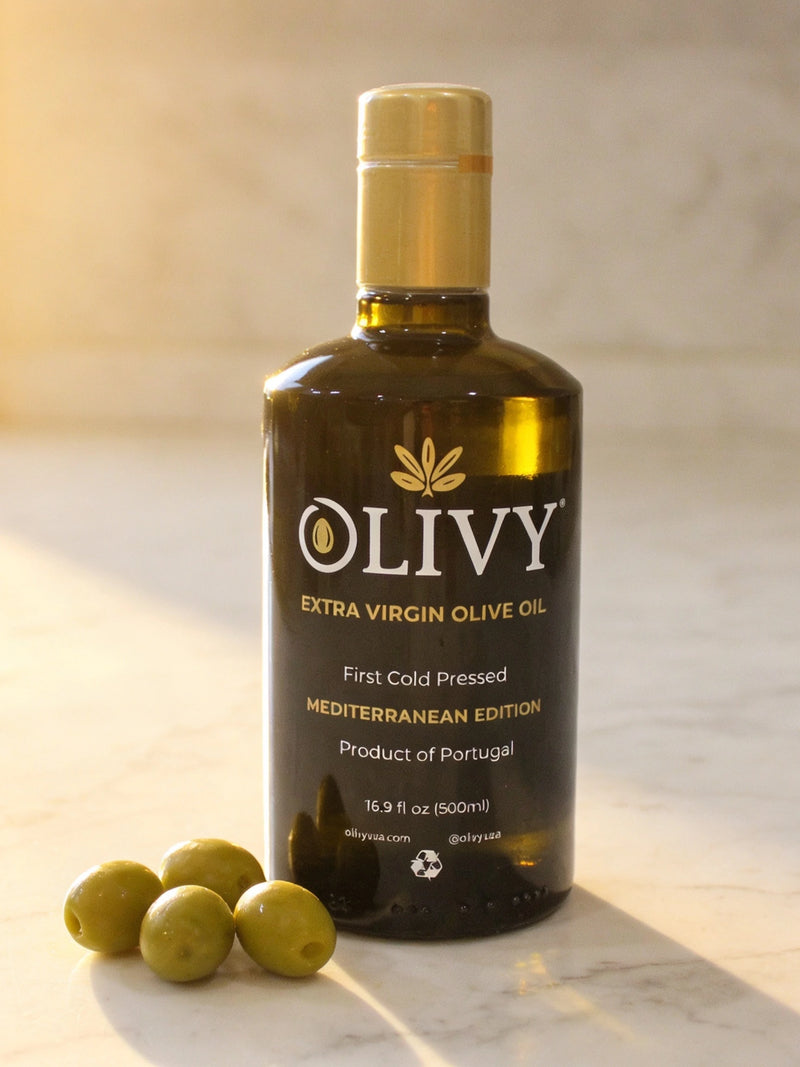
Every Olivy harvest is analysed by the Laboratório de Estudos Técnicos at the Instituto Superior de Agronomia, University of Lisbon — an independent university laboratory — and the full report is published on our proof page with its batch number. For the current harvest of the Mediterranean Edition, free acidity reads 0.11%, alongside 6.2 meq/kg peroxide value and 439 mg/kg total polyphenols, from the February 2025 PDO Trás-os-Montes batch #866.00/25.
What 0.11% does tell you: the fruit arrived at the mill in sound condition and was pressed quickly. At roughly one part in a thousand, there was very little time or damage for enzymes to act. That is a statement about harvest discipline — early picking, shallow crates, a short trip, milling within hours — and it is difficult to fake, because the number comes out of a lab rather than a marketing meeting.
What it does not tell you: how the oil tastes, how many polyphenols it carries, whether it has been stored well since bottling, or whether you will like it. Acidity is one line on a panel. A very low figure alongside a high peroxide value would describe an oil that was made beautifully and then treated badly — which is precisely why we publish the whole report rather than the flattering line, an argument we make in why third-party lab reports matter.
Why "low acidity" on a label isn't enough on its own

"Low acidity" appears on a great many bottles, and it is usually true, because every oil sold as extra virgin is below 0.8% by definition. As a differentiator, the phrase does very little work unless a specific number sits behind it.
Three questions turn it into information:
- What is the actual figure? "Low acidity" without a number is a category description, not a measurement.
- Which batch and which harvest does it describe? Acidity is set at pressing, so a figure with no harvest attached could belong to any year the producer has ever made.
- Who measured it, and can you read the report? A number a producer prints about itself is a claim; a number from an independent lab, published with a batch code, is evidence.
None of this requires expertise. It requires asking for a document, and noticing whether one arrives. The wider version of that check — labels, harvest dates, what to look for on the shelf — is in how to spot real extra virgin olive oil.
Frequently asked questions
What does acidity mean in olive oil?
It means the percentage of free fatty acids in the oil by weight, conventionally expressed as oleic acid. Free fatty acids are released when the triglycerides in olives break down, mostly through bruising, delay before milling, over-ripeness or pest damage. The figure is a record of how the fruit was handled between the tree and the mill, not a measure of flavour.
Can you taste acidity in olive oil?
No. At the concentrations found in edible olive oil — well under one percent — free fatty acids have no flavour or aroma, and even trained sensory panellists cannot detect them. Free acidity is not the same as the sourness of a lemon and is not a pH measurement. It matters because it correlates with handling problems that do produce detectable defects.
What is a good acidity level for extra virgin olive oil?
The legal maximum for extra virgin is 0.8% under the IOC trade standard, so anything sold as extra virgin is below that. Well-made oils from early-harvest fruit milled quickly typically come in far lower — figures in the range of one to three tenths of a percent indicate unusually careful handling. Our current harvest tests at 0.11%.
Does low acidity mean higher quality olive oil?
It is a strong signal about one specific thing — how carefully the fruit was picked and how quickly it was pressed — but it is not a complete quality verdict. Acidity says nothing about polyphenol content, freshness since bottling, or flavour, and an oil can pass on acidity while failing the sensory panel. It is best read alongside peroxide value, the K-values and a harvest date.
Does olive oil acidity increase over time in the bottle?
Only slightly under normal storage. Unlike peroxide value, which climbs steadily with exposure to light, heat and air, free acidity is largely determined before and during pressing and moves little afterwards. This is why acidity describes how an oil was made, while peroxide value describes how it has been kept.
Written by The Olivy Kitchen. Every claim here ties to a published lab report or a cited source.
An acidity figure is only as good as the report behind it. Every Olivy harvest's full panel is public, batch numbers included, and the Mediterranean Edition ships with the batch number that matches it.
Sources
- International Olive Council — Trade standard applying to olive oils and olive-pomace oils (Rev. 20)
- International Olive Council — olive oil grades and designations
- USDA AMS — Olive Oil and Olive-Pomace Oil Grades and Standards (voluntary)
- Olivy — published lab reports (0.11% free acidity, 6.2 meq/kg peroxide, 439 mg/kg polyphenols, University of Lisbon)