Caldo Verde: The Portuguese Soup That Needs a Good Olive Oil
The Portuguese soup of potato, finely shredded greens and olive oil, finished with a thread of good oil at the table. Serves 4 to 6, about 45 minutes.

Recipe
- Prep
- 20 min
- Cook
- 25 min
- Total
- 45 min
- Serves
- 4 to 6
Ingredients
- 2 tablespoons olive oil for cooking, plus more to finish
- 1 medium yellow onion, chopped
- 2 to 3 garlic cloves, sliced
- 5 medium potatoes (about 1.5 pounds), peeled and sliced thin
- 2 liters (8 cups) water, or half water and half light stock
- 1 to 1.5 teaspoons salt, to taste
- 300 g (about 10 ounces) collard greens or kale, thick stems removed
- 1 chouriço or smoked Portuguese-style sausage, about 8 ounces, sliced into coins
- Freshly ground black pepper
Method
- Soften. Warm the 2 tablespoons of oil in a large pot over medium heat. Add the onion and a pinch of salt and cook for 6 to 8 minutes until soft and translucent, without browning. Add the garlic for the last minute.
- Simmer the potatoes. Add the potatoes and water, bring to a simmer, and cook for 20 to 25 minutes, until a fork slides through a slice with no resistance.
- Prepare the greens while it simmers. Stack the leaves, roll them tightly like a cigar, and slice across into the thinnest threads you can. Very fine shredding is what lets the greens cook in minutes.
- Cook the sausage. Brown the coins in a dry skillet for a few minutes until they release their fat and the edges crisp. Set them aside.
- Blend. Take the pot off the heat and purée the soup until it is completely smooth. Taste for salt.
- Add the greens. Return the pot to low heat and stir in the greens. Simmer 3 to 5 minutes for kale and up to 10 for collards, until soft but still bright green.
- Finish. Ladle into warm bowls, lay a few slices of chouriço on each, grind on some pepper, and drizzle the finishing oil over the top at the table.
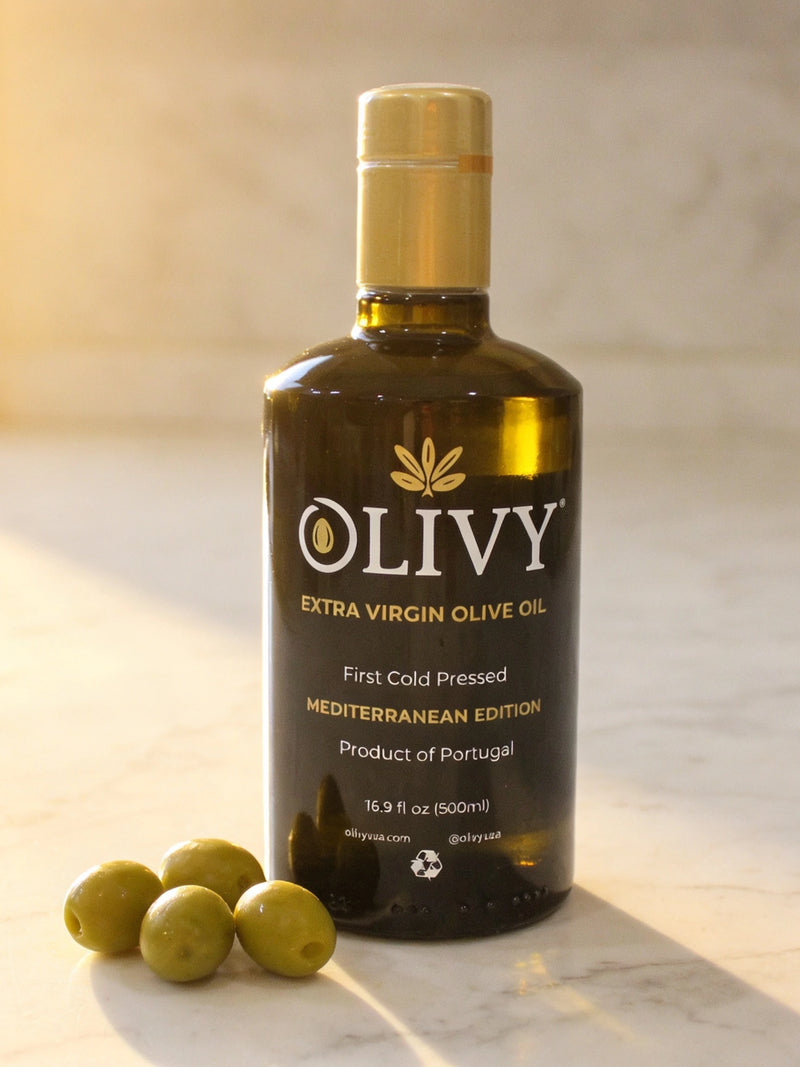
We cook this with our single-origin extra virgin olive oil from Trás-os-Montes. See the bottle
Caldo verde is the Portuguese soup of potato, thinly shredded greens and olive oil, and the oil is the part that makes it. This caldo verde recipe serves four to six and takes about 45 minutes: potatoes and onion cooked soft and blended into a smooth base, finely shredded collards or kale stirred in at the end, slices of chouriço on top, and a thread of good olive oil over each bowl. The base is plain on purpose, so the oil you finish with is the flavor you taste. Below you will find the story of the soup, the recipe with US-friendly swaps, how much finishing oil to use and when, a simple two-oil tasting you can do in your own kitchen, and what to put on the table beside it.
Where caldo verde comes from, and why it needs olive oil
Caldo verde means "green broth." Culinary sources trace it to the Minho region of northern Portugal. A Lisbon cooking school, the Lisbon Cooking Academy, dates the soup to the mid-15th century as food for farm workers, and points out that the version with potatoes is younger: potatoes reached Portugal in the 16th century and only became widespread in the 18th, so the earliest soups were probably made with greens and perhaps chestnuts instead. Wikipedia reports that caldo verde was named one of Portugal's Seven Wonders of Gastronomy in 2011 and that it is traditionally eaten at weddings, birthdays and popular celebrations, with slices of chouriço and a Portuguese cornbread called broa on the side.
The soup has a few core pieces, and olive oil is in more than one of them. Table Journey describes it as a puréed potato and onion base finished with olive oil, with the oil used both in the cooking and as a finishing touch, "a thread of good olive oil" over the top. It also notes regional differences: the Braga version is denser and more pork-rich, with more olive oil, more chouriço and less water, and the Minho original served the soup plain, without the sausage slice that defines the Lisbon version.
That is the reason this soup is a good place to taste an oil. There is almost nothing else in the bowl to hide behind: potato, onion, greens and salt. A flat oil makes a flat soup, and a fresh, peppery one changes it.

A simple caldo verde recipe
The proportions follow the traditional recipe from the Lisbon Cooking Academy (five medium potatoes, two liters of water, about 300 g of greens, one onion, two cloves of garlic and one chouriço), adapted for a home kitchen with a few notes of our own.
Serves 4 to 6. Active time 25 minutes, total about 45. The full ingredient list and method are in the recipe card at the top of this page. One note on the greens: the Lisbon Cooking Academy's version adds the kale off the heat to keep the color, so if your greens are cut very fine you can do that too and let them wilt for a couple of minutes.
US-friendly swaps
- The greens. The traditional leaf is couve galega, a Portuguese kale. Wikipedia notes that other leafy greens such as kale or mustard greens are used as alternatives. In US kitchens, collard greens are the closest widely sold leaf and lacinato (Tuscan) kale is a good second, and one recipe from Taste With the Eyes calls collards "closer to tradition" and kale "a common alternative." Whichever you choose, cut out the thick center rib and slice thin.
- The sausage. Chouriço is a smoked pork sausage seasoned with paprika and garlic. Portuguese-style linguiça or any good smoked sausage works. Drop it for a vegetarian bowl, which brings you close to the plain Minho original described above.
- The potatoes. Use yellow or gold potatoes. Their texture blends creamier than a baking potato.
- The base liquid. Water is traditional. A light stock adds depth, but keep it low in salt so you can season the finished soup yourself.
- The pan oil. You can cook the onion in any olive oil you like, since the heat softens it. Save your best bottle for the finish.
If you are wondering whether extra virgin olive oil is fine for sautéing, it is, and our guide on cooking with extra virgin olive oil and the smoke point myth explains why.
How much finishing oil, and when to add it
This part is editorial guidance, not a rule from a source: start with one to two teaspoons per bowl, poured over the top at the table. If you finish the whole pot in the kitchen, the aroma is gone by the time it is served, so wait. Adding the oil at the table lets the person eating it smell it first, and it sits on the surface as a thin gold shimmer, not stirred in.
Two points on quantity. First, caldo verde tolerates a generous drizzle. The Braga style, as described above, uses more oil, not less. Second, a pot of soup for six is about a tablespoon and a half of finishing oil at one teaspoon a bowl, or two tablespoons at a teaspoon and a half, so a good bottle goes a long way here. A 500 ml bottle holds about 34 tablespoons, a calculation we walk through in our guide to olive oil cost per tablespoon.
If your oil is the kind that is slightly bitter and peppery at the back of the throat, that is a fresh olive oil doing what it should, and it is a pleasant contrast against the soft potato. Our olive oil tasting guide covers how to read those notes.
Northern Portugal is where the soup comes from and also where Olivy's oil comes from, though Olivy's is from the Trás-os-Montes region to the east of Minho. It is single-origin, early-harvest and first cold-pressed, and our guide to Trás-os-Montes explains the region. We make no claim that this is the oil that Portuguese cooks use for caldo verde. We simply think it is a good oil to finish a simple soup, and the lab reports behind it are public.

Tasting two oils in a plain soup
A bowl of caldo verde makes a quiet, fair test for comparing oils, because the base is so neutral. Here is a simple way to run it at home.
- Make the soup through the blending step and keep it warm.
- Ladle two equal small bowls of the plain soup, with no greens or sausage for the first round if you want the cleanest read.
- Pick two oils, such as your everyday oil and a finishing oil. Label the bowls on the bottom or on a note, and have someone else pour so you do not know which is which.
- Add one teaspoon of each oil to its bowl, without stirring.
- Smell each bowl first. Then taste a spoonful of the soup plain from the middle, then a spoonful that catches the oil from the top.
- Notice what the oil adds: fruit or grass in the smell, bitterness on the tongue, a peppery catch at the back of the throat, or nothing at all.
If you cannot tell the two apart, that is useful too, because it means you can save the better oil for something else. If one stands out, you have found your finishing oil. Eating the greens and sausage afterward is the reward.
What to serve with caldo verde
- Bread. Broa, the Portuguese cornbread, is traditional. In the US, a crusty country loaf or a corn muffin works. Tear a piece and drag it through the oil on top of the bowl.
- Olives and a plate of cheese. A small dish of olives and a few slices of a firm sheep or cow milk cheese makes a light supper beside a soup this plain.
- A simple salad. A bowl of sliced tomatoes or a salad of bitter leaves dressed with oil, lemon and salt, as in our extra virgin olive oil salad dressing guide.
- A pot big enough for leftovers. Caldo verde reheats well. Add a splash of water, warm gently, and add fresh oil at the table again.
Serve it in deep bowls, in the middle of a table, with the oil bottle within reach. That is how it tends to arrive at a Portuguese table: simple, hot, and shared.
Frequently asked questions
What is caldo verde?
Caldo verde is a Portuguese soup of puréed potato and onion with very finely shredded greens, traditionally couve galega, finished with olive oil and usually served with slices of chouriço. It comes from the Minho region of northern Portugal.
What kind of olive oil do you use for caldo verde?
Use any olive oil to soften the onion, and a good extra virgin olive oil to finish each bowl, so you can smell and taste it. Fresh, slightly peppery oil gives the plain potato base a lively finish.
Can I use kale or collard greens instead of couve galega?
Yes. Collards are the closest widely available leaf, and lacinato kale is a common alternative. Remove the thick center rib and slice the leaves into very thin threads.
How do you keep the greens bright green?
Slice them very thin so they need only a few minutes, and add them at the end. One traditional method adds the shredded kale after turning off the heat so it keeps its color.
Is caldo verde vegetarian?
The base of potato, onion, greens and olive oil is. The sausage on top is optional, and the Minho original, according to Table Journey, was served without it.
Written by The Olivy Kitchen. The Olivy Kitchen is Olivy's in-house editorial team, writing about single-origin extra virgin olive oil, how it's tested, and how to use it. Every claim is tied to a published lab report or a cited source.
If you would rather read a report than a slogan: Olivy Mediterranean Edition is single-origin, PDO Trás-os-Montes, early-harvest and first cold-pressed, and its lab reports are public.