Trás-os-Montes DOP: The Region Behind Portuguese Olive Oil

Trás-os-Montes DOP is a protected designation of origin covering extra virgin and virgin olive oil made in a defined stretch of north-eastern Portugal, from a registered set of native olive varieties. DOP — Denominação de Origem Protegida, the Portuguese form of the EU's PDO — means the region is not a description on a label but a legal boundary, audited by a named certification body. For anyone trying to work out what Portuguese olive oil actually is, this designation is the most concrete answer available: a specific map, specific varieties, and a specific control plan. Here is what it covers, what it guarantees, and what it does not.
What is Trás-os-Montes DOP?
Azeite de Trás-os-Montes DOP is an EU-registered protected designation of origin for olive oil produced in the Transmontana region of northern Portugal, using traditional local olive varieties. It sits on the EU's geographical indications register alongside the designations most people know from wine and cheese.

The practical meaning is narrow and useful. A producer cannot decide to call their oil Trás-os-Montes because it sounds appealing. To use the name, the oil has to be made inside the mapped area, from the registered varieties, to a published specification — and a producer group and an independent certification body verify it. The designation is administered with the producer association AOTAD (Associação de Olivicultores de Trás-os-Montes e Alto Douro), and control and certification are carried out by Kiwa Sativa.
The oil has a long documented history in the region. The first olive orchards around Mirandela date to the first half of the sixteenth century; by 1894 the area was producing 776 kilolitres, and in 1903 the region's olives took a silver medal at an agricultural show. This is not a designation invented to market a modern product.
Where the region actually is
Trás-os-Montes — literally "behind the mountains" — is the north-eastern interior of Portugal, inland from Porto and bordering Spain. The mountains that give it its name also cut it off from Atlantic weather, which is the whole reason it grows the olives it does.
The DOP area covers the municipalities of Mirandela, Vila Flor, Alfândega da Fé, Macedo de Cavaleiros, Vila Nova de Foz Côa and Carrazeda de Ansiães, along with parts of Valpaços, Murça, Moncorvo, Mogadouro, Vimioso and Bragança.
Within it sits a sub-region locals call Terra Quente — "the hot land." The name describes the climate accurately: hot, dry summers and cold winters, a continental swing that a coastal Mediterranean grove never experiences. Olive trees under that kind of water and heat stress produce less fruit, and the fruit they do produce tends to be more concentrated. It is the same logic that makes marginal, difficult land interesting for wine.
Altitude and schist soils add to it. This is not easy, flat, irrigated farming. It is terraced hillsides, old trees, and a harvest that has always depended on people rather than machines — which the designation's own description acknowledges when it notes that growers here have historically taken unusual care over picking conditions.
What DOP protection requires — and what it doesn't
DOP guarantees origin, variety and method against an audited specification. It does not, on its own, guarantee that any particular bottle is fresh, high in polyphenols, or the best oil on the shelf. Understanding the boundary is what makes the seal useful rather than decorative.
| DOP does verify | DOP does not verify |
|---|---|
| The oil was produced inside the mapped geographical area | How recent the harvest is |
| The olives are the registered varieties for the designation | The polyphenol content of the specific batch |
| Production followed the published specification | How the bottle has been stored since leaving the mill |
| An independent body audits compliance against a control plan | That one DOP oil is better than another DOP oil |
So a DOP seal answers the question "is this really from where it says?" — which, in a category with a documented history of origin misrepresentation, is not a small question. It does not answer "how good is this specific bottle, right now?" That one is answered by a batch lab report, which is a different document doing a different job. The two complement each other: DOP verifies the provenance, the lab panel verifies the contents. What DOP certification covers more broadly is set out in what DOP-certified olive oil means, and what a lab panel adds is in what to check in third-party testing.
The registered olive varieties
The designation is built on four traditional Transmontana varieties: Verdeal Transmontana, Madural, Cobrançosa and Cordovil. These are native cultivars, not international plantings, and each does something different in a blend.
- Verdeal Transmontana — the region's namesake green variety, associated with the more assertive, herbaceous end of the profile.
- Madural — traditionally the balancing variety, softening and rounding a blend.
- Cobrançosa — one of the most widely planted varieties in Portugal and a mainstay here, contributing much of the aromatic complexity.
- Cordovil — a regional variety used to complete the traditional composition.
Worth being precise about one thing: these are the varieties the designation registers. They are not a statement about the varietal make-up of any individual producer's oil, including ours — we don't publish a varietal breakdown, so we won't claim one here. If a brand's cultivar mix matters to you, it is a fair question to ask them directly.
What Trás-os-Montes olive oil tastes like

The designation's own description calls it a balanced oil with the smell and flavour of fresh fruit, sometimes almond, and a marked sensation of sweet, green, bitter and spicy notes. That combination — the almond note in particular — is what the region's producers point to as distinguishing it from other Portuguese oils.
Two of those four descriptors are worth translating. Bitter and spicy (usually described as pungent or peppery) are not faults. In official sensory assessment they are graded as positive attributes, and both come from the oil's phenolic compounds — the bitterness largely from oleuropein derivatives, the peppery catch at the back of the throat largely from oleocanthal. When people say a Portuguese oil "bites," they are describing chemistry, not a defect. Why that matters is covered in the piece on oleocanthal.
The "balanced" part is the interesting bit. A blend of four varieties, picked from stressed trees on dry hillsides, tends to land somewhere with structure but not aggression — which is why it works as an everyday finishing oil rather than only as a statement one. The harvest-timing decision layered on top of that is what pushes an individual oil green and bitter or riper and rounder: early versus late harvest.
Portuguese olive oil labels: DOP vs single-origin vs "Product of Portugal"
Three phrases that appear on Portuguese olive oil, sound similar, and verify completely different things. This is the distinction most worth carrying to a shelf.
| Phrase | What it actually means | Who checks it |
|---|---|---|
| DOP / PDO | Made in a defined region, from registered varieties, to a published specification | A named certification body, against a control plan |
| Single-origin | The oil comes from one place — but "one place" can mean one grove or one country, depending who is using the term | Nobody, unless the producer publishes traceability |
| Product of Portugal | The oil was bottled or processed in Portugal. The olives may have been grown elsewhere | Customs and labelling rules, not a quality body |
None of the three is dishonest. They simply verify different things, and only the first involves an independent audit against a specification. What "single-origin" does and doesn't promise is taken apart in what single-origin actually means, and the broader case for Portugal as an origin is in why Portuguese olive oil deserves more attention.
Where our oil sits
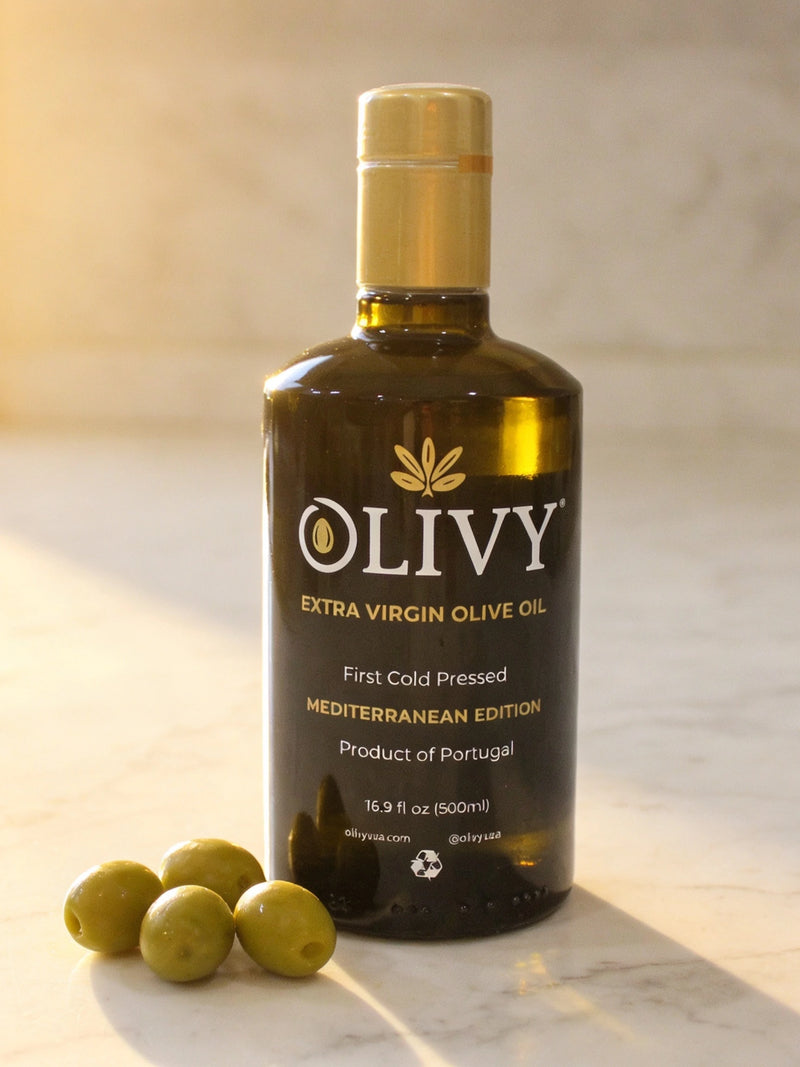
Our oil is single-origin, from one grove in PDO Trás-os-Montes, early harvest and first cold-pressed. The designation covers where it comes from. The lab panel covers what is in it, and we publish that in full with the batch number printed on the bottle:
| Parameter | Result | Reference |
|---|---|---|
| Total polyphenols | 439 mg/kg | EU reference point: 250 mg/kg |
| Free acidity | 0.11% | Extra virgin limit: 0.8% |
| Peroxide value | 6.2 meq/kg | Extra virgin limit: 20 meq/kg |
The analysis is run by the Laboratório de Estudos Técnicos at the Instituto Superior de Agronomia, University of Lisbon — independent of us, and re-run for every batch and every harvest. That pairing is the point: a designation tells you the oil is from where it claims, and an independent panel tells you what it is. Neither is sufficient alone, and most bottles offer only one of them, or neither.
Frequently asked questions
What does Trás-os-Montes DOP mean on olive oil?
It means the oil qualifies for Azeite de Trás-os-Montes, an EU-registered protected designation of origin. To carry the name, the oil must be produced within a mapped area of north-eastern Portugal, from the designation's registered olive varieties, following a published specification, with compliance audited by an independent certification body. It verifies origin, variety and method — not the freshness or polyphenol content of a particular bottle.
Where is the Trás-os-Montes olive oil region?
It is the north-eastern interior of Portugal, inland from Porto and bordering Spain. The DOP area covers the municipalities of Mirandela, Vila Flor, Alfândega da Fé, Macedo de Cavaleiros, Vila Nova de Foz Côa and Carrazeda de Ansiães, plus parts of Valpaços, Murça, Moncorvo, Mogadouro, Vimioso and Bragança. Within it lies the sub-region known as Terra Quente, "the hot land," named for its hot, dry summers and cold winters.
Which olive varieties are used in Trás-os-Montes DOP olive oil?
The registered varieties are Verdeal Transmontana, Madural, Cobrançosa and Cordovil. These are native Portuguese cultivars rather than international plantings. Verdeal Transmontana contributes the more herbaceous end of the profile, Madural balances a blend, Cobrançosa adds much of the aromatic complexity, and Cordovil completes the traditional composition.
Is DOP olive oil better than non-DOP olive oil?
Not automatically. DOP verifies where an oil comes from, which varieties it uses, and that production followed an audited specification — genuinely valuable in a category with a documented history of origin misrepresentation. It does not measure the freshness, acidity or polyphenol content of the specific batch you are buying. A DOP seal and a current third-party lab report answer different questions, and the strongest position is having both.
What does Trás-os-Montes olive oil taste like?
The designation describes it as balanced, with the aroma and flavour of fresh fruit, sometimes almond, and a marked sensation of sweet, green, bitter and spicy notes. The bitterness and pepperiness come from phenolic compounds and are graded as positive attributes in official sensory assessment, not as defects. The almond character is the note producers most often cite as distinguishing it from other Portuguese oils.
Written by Pedro Borges, Co-Founder of Olivy. Raised in a family where good food was a daily ritual, Pedro brings firsthand knowledge of single-origin olive oil straight from the source. His writing reflects years of working closely with Portuguese producers and a genuine passion for the craft behind every bottle. Every claim here ties to a published lab report or a cited source.
A region tells you where an oil is from; a lab report tells you what's in it. Every Olivy harvest's full panel is public, batch codes included, and the Mediterranean Edition ships with the batch number that matches it.
Sources
- DGADR (Portuguese Directorate-General for Agriculture and Rural Development) — Azeite de Trás-os-Montes PDO: varieties, production area, distinctive features, history
- Azeite de Trás-os-Montes DOP — product specification (PDF)
- European Commission eAmbrosia — geographical indications register entry for Azeite de Trás-os-Montes
- International Olive Council — COI/T.20/Doc. No 15/Rev. 11 (bitter and pungent as positive sensory attributes)
- Olivy — published lab reports (439 mg/kg polyphenols, 0.11% acidity, University of Lisbon)