Early Harvest vs Late Harvest Olive Oil: The Polyphenol Difference

Early harvest olive oil is pressed from green, under-ripe olives and carries substantially more polyphenols; late harvest oil comes from riper fruit, yields far more oil per tonne, and tastes milder because it has fewer of those compounds. This single decision — when to pick — does more to determine whether an oil ends up high polyphenol than almost anything else a producer controls. It also costs money, which is why most oil is picked later than it could be. Here is what changes inside the fruit, what the trade-off actually is, how it shows up in taste, and how to tell which one you are buying.
What's the difference between early and late harvest olive oil?
The difference is ripeness at picking, and everything else follows from it. Early harvest fruit is green to green-purple, firm, and picked weeks before the tree's oil content peaks. Late harvest fruit is purple to black, softer, and picked at or after peak oil content.

| Early harvest | Late harvest | |
|---|---|---|
| Fruit | Green to green-purple, firm | Purple to black, softer |
| Polyphenols | Higher | Lower |
| Oil yield per tonne of fruit | Lower | Higher |
| Taste | Grassy, bitter, peppery | Milder, rounder, buttery |
| Shelf stability | Better — polyphenols act as antioxidants | Shorter |
| Cost to produce | Higher | Lower |
Neither is a defect. A late-harvest oil made from sound fruit and milled promptly can be an excellent extra virgin. But if you are specifically shopping for a high polyphenol olive oil, harvest timing is the first thing to ask about, because no amount of care afterwards will put back what was never picked.
Why green olives carry more polyphenols
Because the phenolic compounds in an olive are highest while the fruit is still developing, and they break down as it ripens. The dominant one in olive fruit is oleuropein — the compound responsible for the intense bitterness of a raw olive.
As the fruit matures and turns from green to purple to black, enzymes progressively degrade oleuropein and the related phenolic compounds. The olive is, from the tree's point of view, becoming palatable to the birds that will disperse its seed. What the tree is doing is reducing bitterness. What that costs, from an oil-making point of view, is the phenolic content.
Meanwhile the opposite curve is running: the fruit is still accumulating oil. So the producer is watching two lines cross. Pick early and you take fruit that is phenolically rich and oil-poor. Wait, and you gain oil while losing the compounds that make a high-phenolic oil what it is.
Those compounds do a second job inside the bottle: they are the oil's own preservative. Polyphenols are antioxidants, which is why a high-phenolic oil generally holds up longer against oxidation than a low-phenolic one. What the number itself means, and how it is measured, is unpacked in what mg/kg polyphenols means on a label.
The yield trade-off: why early harvest costs more
The same tonne of olives produces meaningfully less oil when picked green — so early-harvest oil costs more to make, from the same fruit, the same trees and the same labour. That is the entire economic reason most olive oil is not early harvest.
Stack up what an early pick actually costs a producer:
- Less oil per tonne. The fruit has not finished accumulating oil, so the mill runs the same volume of olives for a smaller output. The exact gap varies by cultivar, region and season, but it is large enough to change the economics of a harvest.
- Harder picking. Green fruit clings to the branch more stubbornly than ripe fruit, so it takes longer to get off the tree and is more likely to be damaged by aggressive methods.
- A narrower window. Early harvest concentrates the work into a shorter period, which means more labour and more mill capacity over fewer days.
None of that is visible in the bottle. It shows up only as a higher price and a higher number on a lab report — which is exactly why the number is worth checking rather than assuming. Whether the premium is worth paying is weighed up honestly in are high-polyphenol olive oils worth it.
How harvest timing changes the taste
Early harvest oil tastes green, bitter and peppery. Late harvest oil tastes milder, rounder and often faintly buttery. Both descriptions are of the same compounds, present in different amounts.
The peppery catch at the back of the throat — the thing that makes people cough on a fresh oil — comes largely from oleocanthal, a phenolic compound. The bitterness on the sides of the tongue comes largely from oleuropein derivatives. So the taste is the polyphenols. You are not detecting quality abstractly; you are tasting the compounds the lab is counting.
This has a practical consequence people rarely mention: a very high-phenolic oil is not automatically the right oil for everything. It is superb on a bean soup, roasted vegetables, grilled bread or a hard cheese, where it has something to push against. On delicate fish or a light mayonnaise it can dominate. Plenty of good cooks keep both, and use them for different jobs.
Why bitterness and pepperiness are quality signals rather than faults is covered in the piece on oleocanthal, and the vocabulary for describing it is in how to taste olive oil.
Does early harvest also mean lower acidity?
Usually yes — but not because of ripeness itself. The two travel together because the same producers who pick early also mill fast. It is worth separating the cause from the correlation.
Free acidity measures fatty acids that have broken loose from their triglycerides, which happens when fruit is bruised, over-ripe, pest-damaged, or left waiting before milling. Riper fruit is softer and damages more easily, so late-harvest oils do tend to run higher. But a producer who picks green and then leaves the fruit in bins for three days will still post a poor acidity figure, and one who picks late but mills within hours can post a very good one.
So the two numbers answer different questions: polyphenols are largely about when you picked; acidity is largely about how you handled it. Reading them as one measurement is the most common mistake in this category. The full separation is in what olive oil acidity actually measures, and what a "low acidity" claim does and does not qualify as is in the low acidity guide.
How to tell which one you're buying

Four checks, in order of how much they actually tell you:
- A polyphenol figure on a lab report. The only direct evidence. A number above roughly 300 mg/kg is consistent with an early pick; below about 150 mg/kg generally is not.
- A harvest date, not a "best by" date. A best-by date is calculated from bottling. A harvest date tells you what season the oil is from, and whether it was picked at the start of the window or the end of it.
- The words on the label — with a figure behind them. "Early harvest," "green harvest" and "first harvest" are unregulated terms. They are often accurate, and they are also free to print. Treat them as a prompt to ask for the number.
- The taste, once you know what you're looking for. Bitterness and a peppery finish are the sensory signature of phenolic content. This is the least precise check and the most satisfying, because it is the only one you can do at the table.
What our harvest timing produces
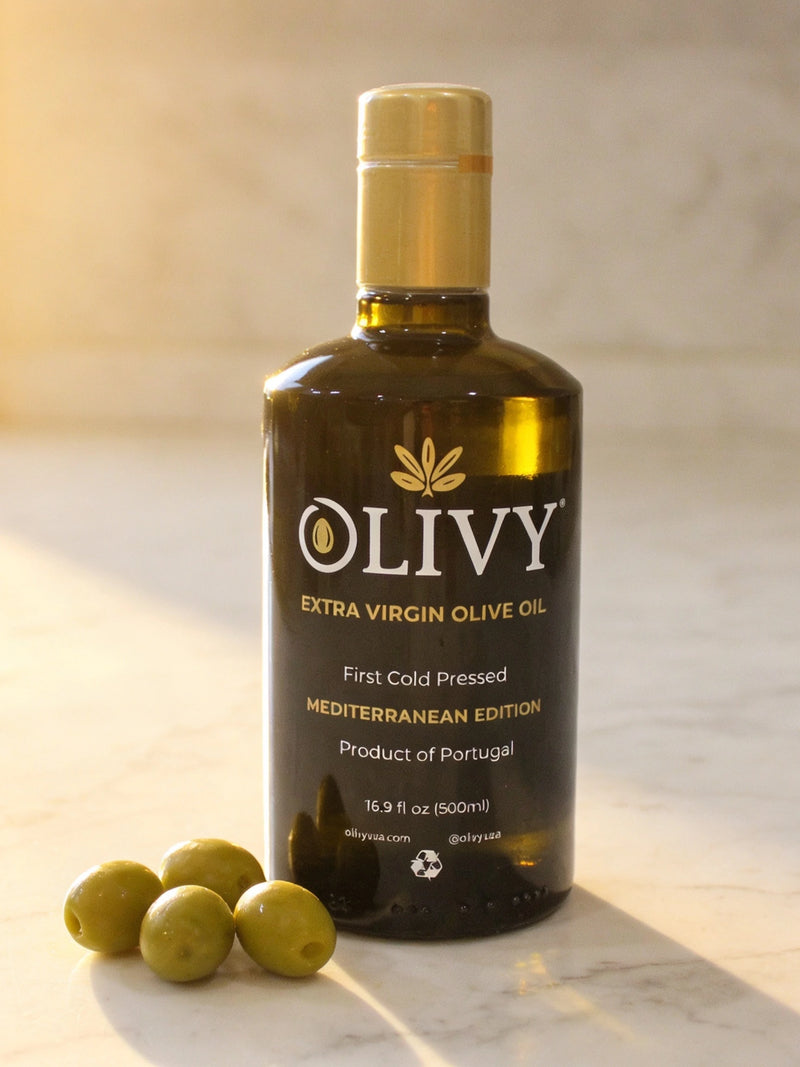
Ours is early harvest, first cold-pressed, from a single PDO Trás-os-Montes grove in northern Portugal. The published result from the independent lab at the Instituto Superior de Agronomia, University of Lisbon:
| Parameter | Result | Reference |
|---|---|---|
| Total polyphenols | 439 mg/kg | EU reference point: 250 mg/kg |
| Free acidity | 0.11% | Extra virgin limit: 0.8% |
| Peroxide value | 6.2 meq/kg | Extra virgin limit: 20 meq/kg |
The 439 mg/kg is the harvest-timing decision showing up as a number. The 0.11% is the handling decision showing up as a different one. And 6.2 meq/kg is the third question — how the oil has been protected since — answered by early pressing and dark glass.
We publish the full report for every batch, with the batch code that appears on the bottle, because a producer's description of its own harvest timing is a claim and a lab panel is not. What to look for in anyone's testing, including ours, is in what to check in third-party testing.
Frequently asked questions
Is early harvest olive oil better than late harvest?
Better for polyphenol content, bitterness, pepperiness and shelf stability — and more expensive, because the same fruit yields less oil when picked green. Late harvest oil from sound, promptly milled fruit is still excellent extra virgin olive oil; it is simply milder and lower in phenolic compounds. If you are specifically looking for a high polyphenol olive oil, early harvest is what you want.
Why does early harvest olive oil cost more?
Mainly yield. Green olives have not finished accumulating oil, so a tonne of early-picked fruit produces meaningfully less oil than the same tonne picked at peak ripeness. Green fruit is also harder to remove from the tree and the picking window is narrower, which raises labour and milling costs. The extra cost buys phenolic content, not volume.
Does early harvest olive oil have more polyphenols?
Yes, consistently. Phenolic compounds — chiefly oleuropein and its derivatives — are at their highest while the fruit is still green and degrade as it ripens toward purple and black. Harvest timing is the single largest factor a producer controls in determining an oil's polyphenol figure, alongside olive variety and how quickly the fruit is milled.
Does early harvest olive oil taste bitter?
Yes, and that bitterness is the phenolic content itself rather than a fault. Oleuropein derivatives produce bitterness on the tongue and oleocanthal produces the peppery catch at the back of the throat. Both are graded as positive attributes in official sensory assessment. A very high-phenolic oil suits robust food — soups, roasted vegetables, grilled bread — better than delicate dishes.
How can I tell if an olive oil is early harvest?
Look for a polyphenol figure on a published lab report, and a harvest date rather than only a best-by date. The phrases "early harvest," "green harvest" and "first harvest" are unregulated and free to print, so treat them as a reason to ask for the number rather than as evidence in themselves. Bitterness and a peppery finish are a useful sensory confirmation.
Written by Pedro Borges, Co-Founder of Olivy. Raised in a family where good food was a daily ritual, Pedro brings firsthand knowledge of single-origin olive oil straight from the source. His writing reflects years of working closely with Portuguese producers and a genuine passion for the craft behind every bottle. Every claim here ties to a published lab report or a cited source.
Harvest timing is a claim until a lab report says otherwise. Every Olivy harvest's full panel is public, batch codes included, and the Mediterranean Edition ships with the batch number that matches it.
Sources
- International Olive Council — olive oil, grades and production
- International Olive Council — Trade standard applying to olive oils and olive-pomace oils (Rev. 20)
- International Olive Council — COI/T.20/Doc. No 15/Rev. 11, Method for the Organoleptic Assessment of Virgin Olive Oil (bitter and pungent as positive attributes)
- International Olive Council — standards and methods (COI/T.20/Doc. No 29, biophenols by HPLC)
- Olivy — published lab reports (439 mg/kg polyphenols, 0.11% acidity, University of Lisbon)